Variegated Monstera Adansonii: Care and Variegation Guide
How to care for a variegated Monstera adansonii: light, water, humidity, climbing support and how to keep the white from reverting to green.
By Gustavo Girard. Updated . 6 min read.
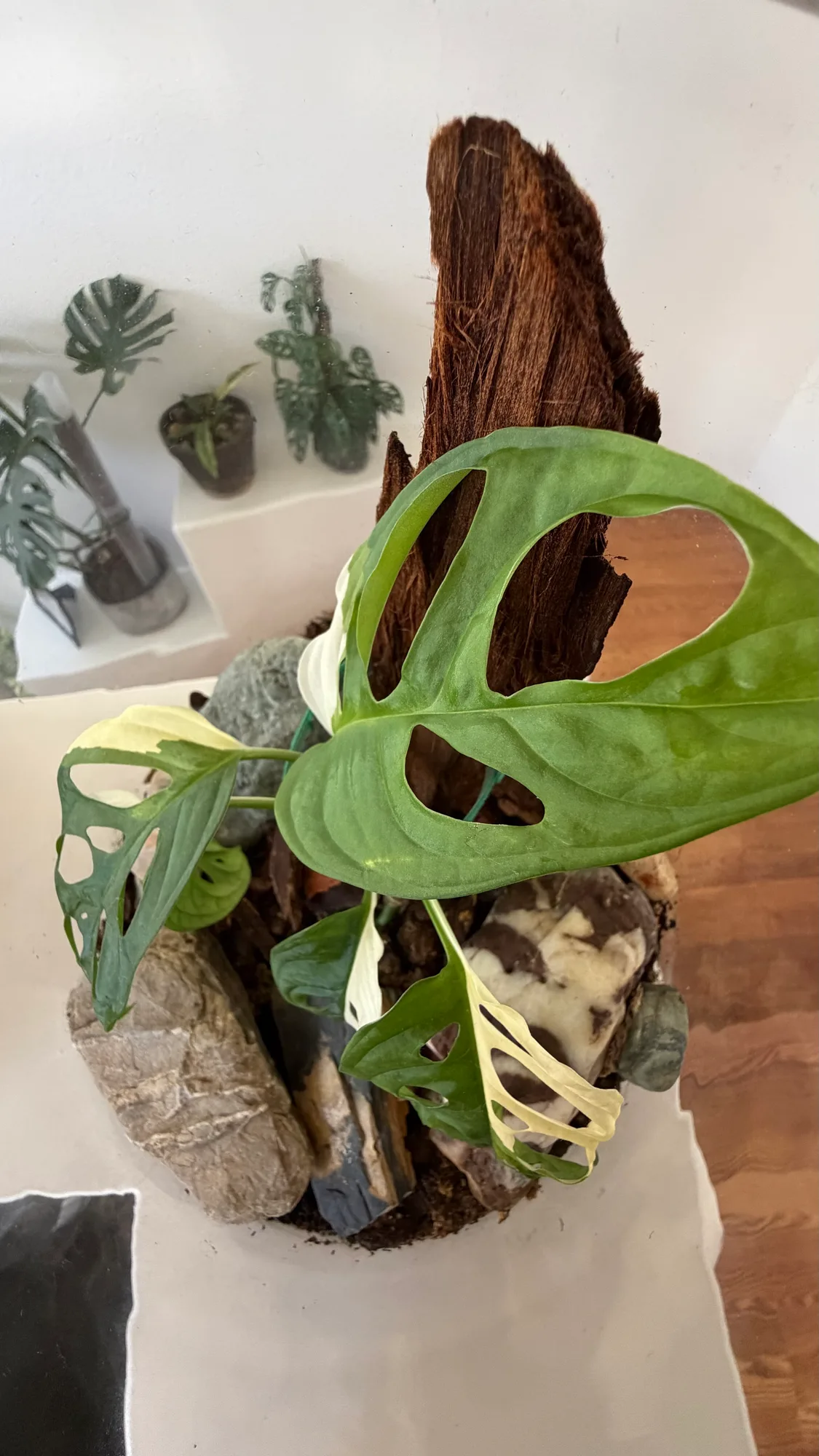
This guide contains affiliate links. If you buy through one, GrowPlants may earn a commission at no extra cost to you. Read the Disclosure
A variegated Monstera adansonii is the Swiss cheese vine with white or yellow patches on its leaves. Its care is close to the green form's, except that it wants more light and more humidity, and it needs pruning whenever a vine reverts. The white tissue makes no food. Almost every decision comes back to keeping enough green on the vine.
What Is a Variegated Monstera Adansonii?#
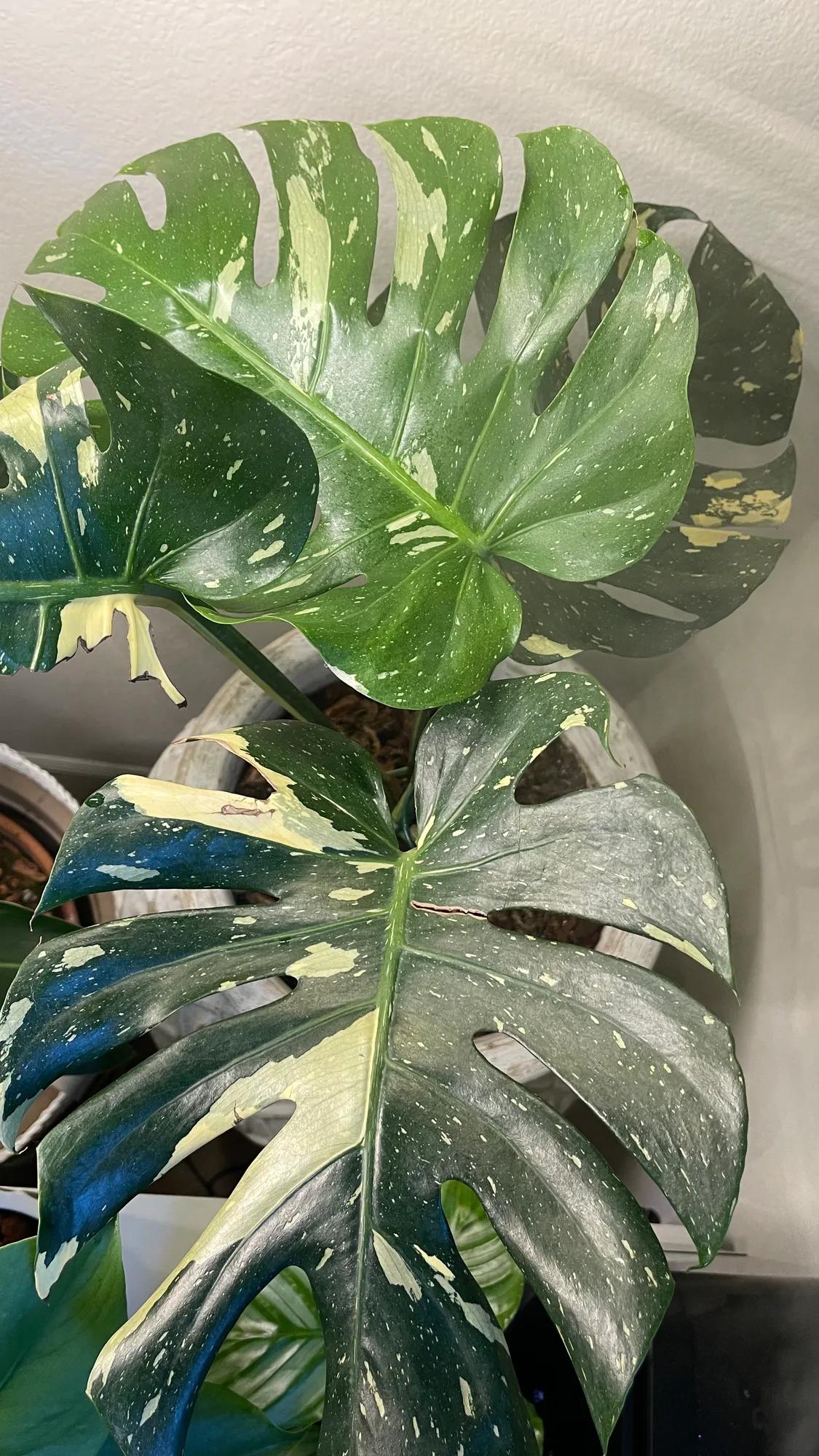
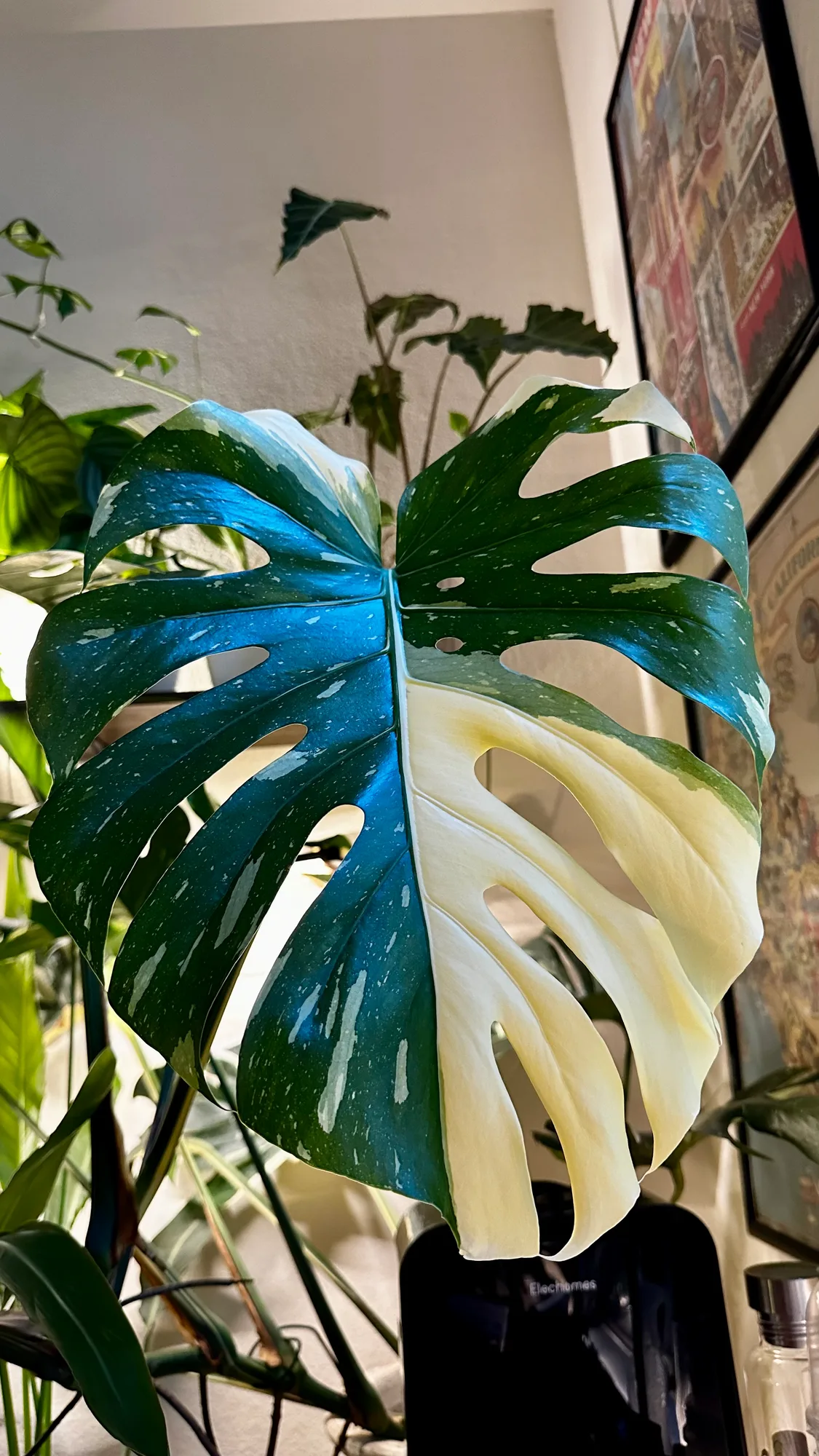
A variegated Monstera adansonii is a mutation of the common Swiss cheese vine in which part of the leaf tissue lacks chlorophyll and grows white or yellow. The leaves keep the oval holes the species is known for. White forms are often sold as adansonii Albo and yellow ones as Aurea. The pattern is unstable, so no two leaves on the same vine match.
How Do You Tell It Apart From Similar Plants?#
Monstera adansonii is easy to confuse with two other vines, and sellers mix them up. Its leaves are thin but sturdy, with holes inside the leaf rather than splits reaching the edge. Monstera obliqua looks similar but is rare, with leaves so thin and so full of holes that they look like lace. Rhaphidophora tetrasperma, often sold as mini monstera, has splits that run to the edge of the leaf instead of enclosed holes.
How Much Light Does It Need?#
A variegated adansonii needs bright, indirect light, more than a green plant would accept. The white tissue does no photosynthesis, so the green parts have to feed the whole vine. Near an east window, or a few feet back from a south or west window, is a good place. Direct midday sun scorches the white sections first. On a desk with no window, a clip on grow light a foot above the plant keeps it growing.
Save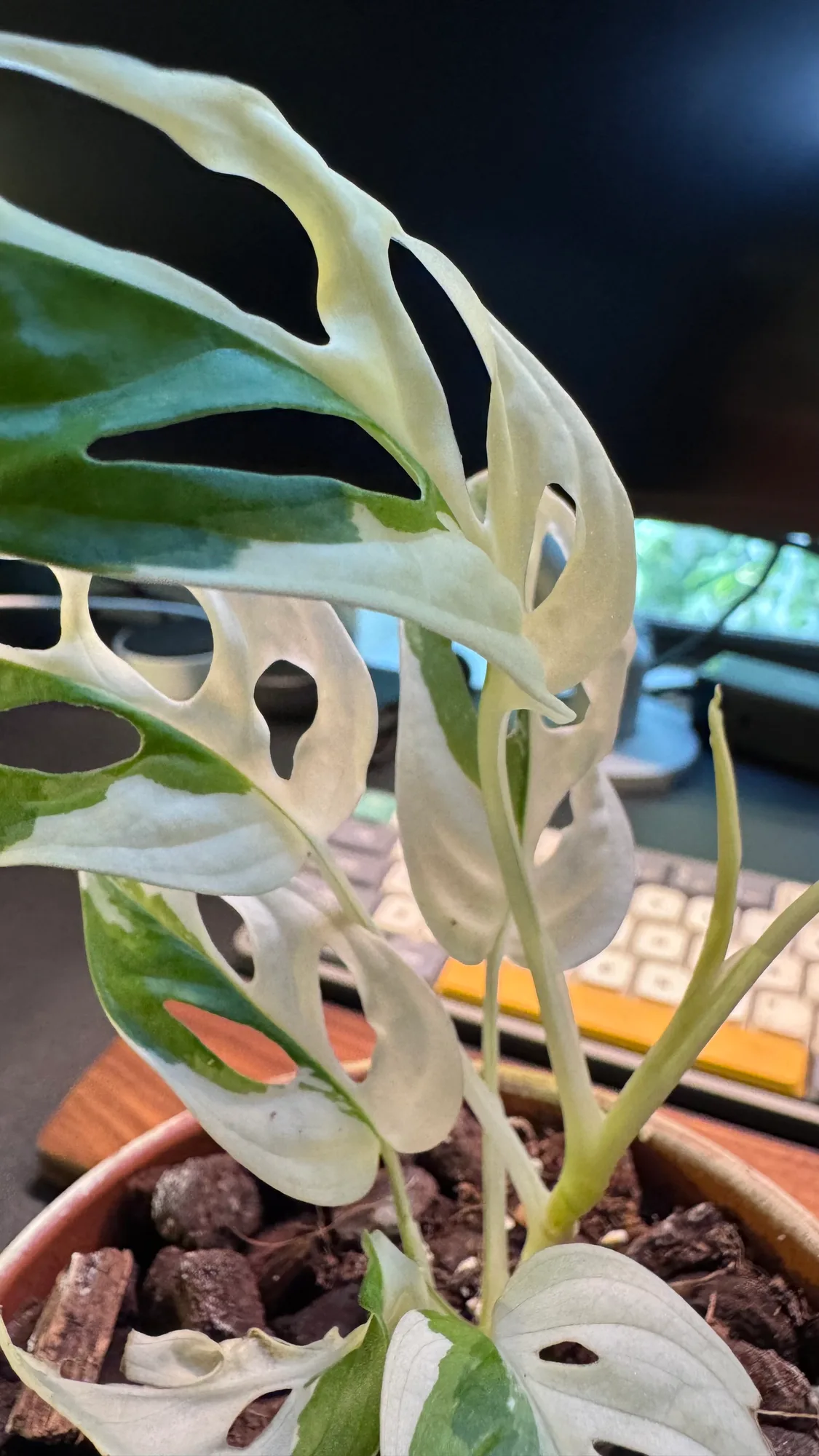 A heavily variegated adansonii on a desk. Leaves with this much white need strong light to stay healthy.
NC State Extension and the RHS agree on bright, indirect light, and NC State warns that direct sun scorches the leaves. Too little light is easy to spot. New leaves come in smaller, with long bare stretches of stem between them, which Penn State Extension calls getting leggy.
How Does Care Change From Summer to Winter?#
A variegated Monstera adansonii grows actively from spring through summer and slows down in winter, so its care should follow the season. The RHS advises watering freely and feeding monthly with a balanced liquid fertilizer during the growing season, then watering sparingly in winter. Shorter days also mean less light, so a plant that sat happily a few feet from a window in July may need to move right up to the glass by December.
Glass gets cold at night, though, and Penn State Extension says monstera wants 60 to 85°F and hates cold drafts. Keep leaves off the pane and away from heating vents.
How Should You Water and Pot It?#
Water a variegated adansonii when the top inch or two of the mix feels dry, then water until it runs from the drainage holes. The roots want air as much as water, so use a chunky aroid mix of bark, perlite and coir in a pot with drainage. Check before watering with a finger or a moisture meter. Soggy mix rots the roots, and the white leaves are the first to collapse.
That is the 1 to 2 inch rule Penn State Extension gives.
What Soil Does It Need?#
A variegated adansonii needs a moist but well drained mix, slightly acidic and loose enough to let air reach the roots. NC State Extension recommends moist, well drained soil with a slightly acidic pH, and the RHS suggests a peat free, loam based potting compost. A chunky aroid mix of bark, perlite and coir meets both descriptions. Avoid dense potting soil on its own, because it stays wet and the white leaves collapse first.
When Should You Repot It?#
Repot a variegated Monstera adansonii when roots circle the inside of the pot or push out of the drainage holes, or when the mix dries out within a day or two of watering. Move up only one size, a pot about 2 inches wider than the current one, which is the step University of Minnesota Extension suggests for monstera. A much larger pot holds wet mix around a small root system and invites rot.
How Much Humidity Does It Need?#
A variegated Monstera adansonii does best at 50 percent relative humidity or higher. NC State Extension says the plant prefers high humidity and suggests a tray of wet pebbles or a humidifier, and Penn State Extension puts the preference for monstera above 50 percent. Indoor air often falls well below that once the heating runs in winter, which is when white edges tend to crisp.
A small humidifier beside the plant fixes this. Put a hygrometer at leaf height so you know the number instead of guessing.
Why Do the White Parts Turn Brown?#
White sections turn brown because they are the weakest tissue on the plant. Dry air is the most common cause: the thin white edges crisp first when humidity drops below about 50 percent. Direct sun, a pot that dried out completely and cold drafts cause the same damage. Raising the humidity fixes most cases. Some browning on mostly white leaves is normal, since they cannot sustain themselves.
Look at where the brown starts. Crisp, papery edges point to dry air, which Wisconsin Horticulture Extension names as the cause of brown monstera leaf edges. Soft brown patches on a plant sitting in wet mix point to the roots instead.
Should It Climb?#
Yes, a Monstera adansonii grows best when it climbs. In nature it is a vine that climbs trees, and on a support it produces larger leaves with more holes than it does trailing from a hanging pot. A moss pole, a cork plank or a piece of driftwood all work. Tie the stem loosely at each node, and the aerial roots will grip the support on their own within a few weeks.
Save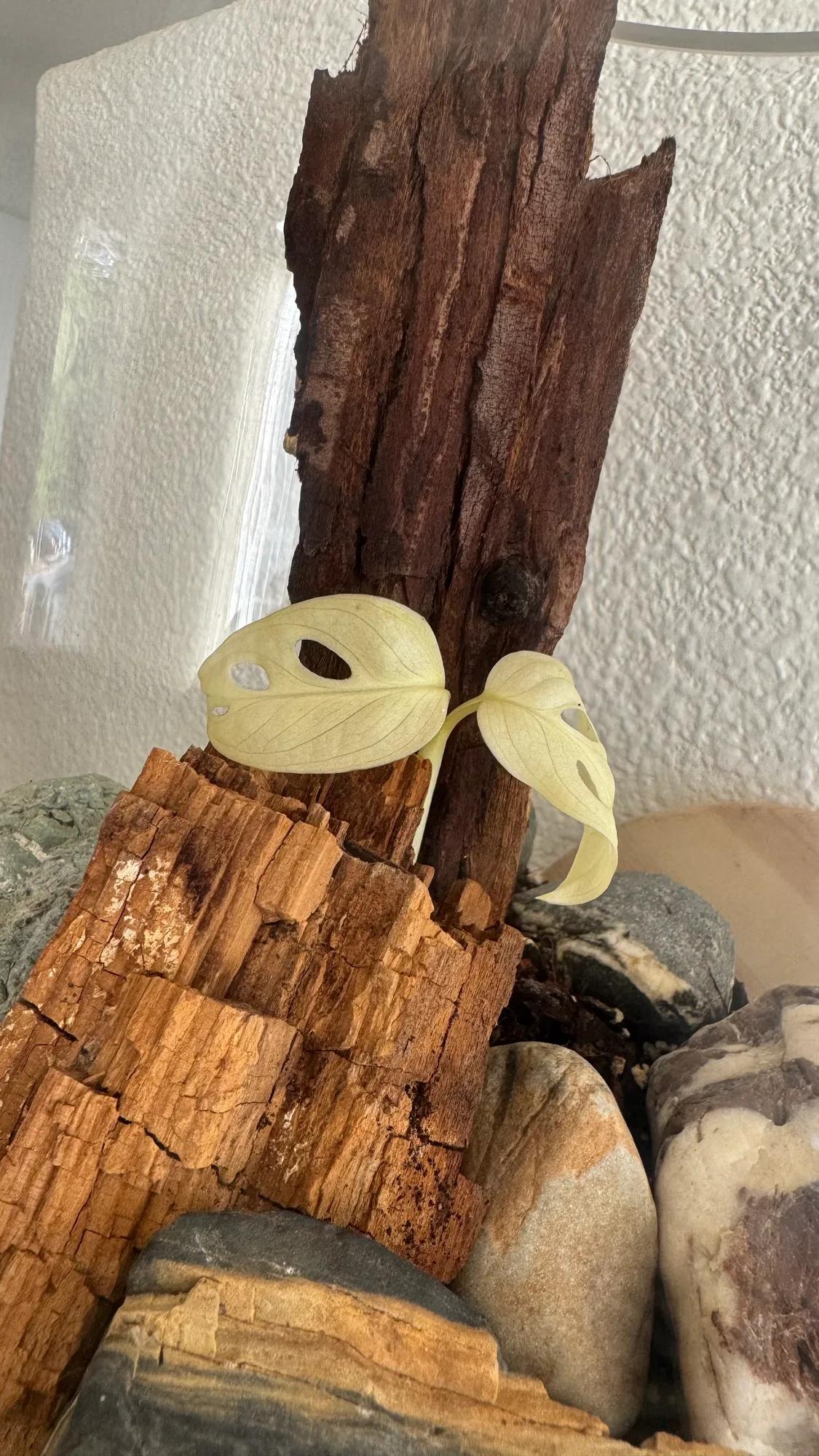 A young variegated adansonii climbing driftwood, with its aerial roots holding the wood.
How Do You Keep the Variegation?#
Keep the variegation by pruning as soon as a vine goes wrong. If new leaves come out fully green, cut the stem back to the last node that showed both green and white, using clean pruning snips. If a vine produces several fully white leaves in a row, cut it back the same way, because white growth cannot feed itself. Good light reduces both problems. The cuttings root like any monstera, as the propagation guide explains.
Save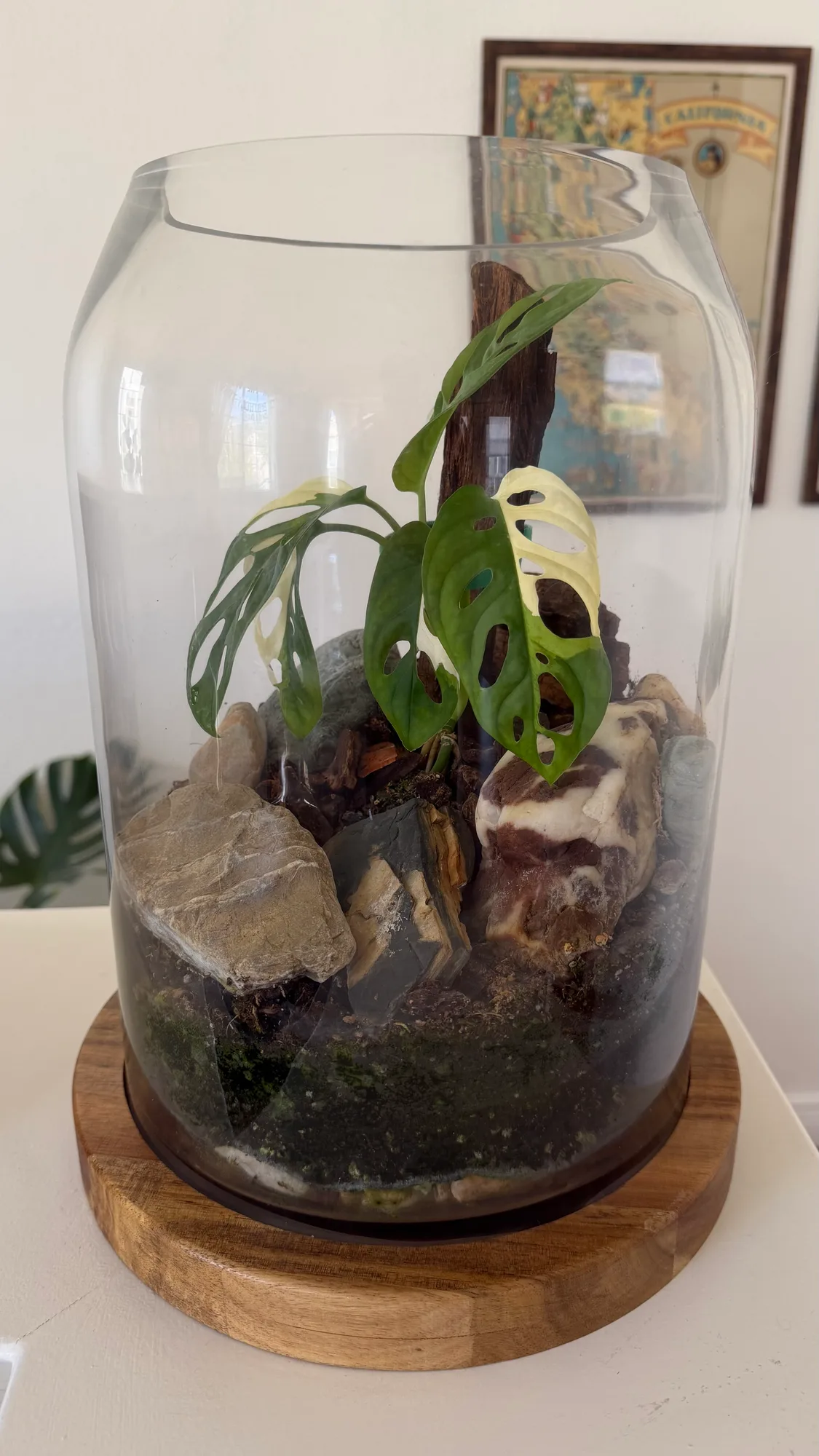 A small variegated adansonii growing in an open glass jar, where humidity stays higher than in the room.
Act quickly. Green shoots win. The RHS explains that reverted shoots carry more chlorophyll, grow more strongly and can eventually take over a variegated plant, so they should be cut back into growth that still shows variegation. University of Florida horticulturists describe the same behavior in unstable chimeras, where normal cell division tends to produce all white or all green shoots over time. We found no research on adansonii itself, so this is the general rule for variegated plants.
Which Pests Attack a Variegated Adansonii?#
The pests that attack a variegated Monstera adansonii are the usual houseplant ones. The RHS lists scale insects and red spider mite, and Penn State Extension adds aphids, mealybugs, thrips and fungus gnats for monstera in general. Check the undersides of the leaves once a week. Spider mites are so small that the damage is usually the first sign you see.
Most early infestations come off by hand. Clemson HGIC suggests a cotton swab dipped in rubbing alcohol for mealybugs, a fingernail for young scale and a strong rinse for spider mites, then insecticidal soap repeated weekly if they come back. It also recommends keeping a new plant away from the others for six weeks.
Is Monstera Adansonii Toxic to Cats and Dogs?#
Yes, Monstera adansonii is toxic to both cats and dogs if a leaf or stem is chewed. The ASPCA lists Swiss cheese plant (Monstera spp.) among houseplants that contain insoluble calcium oxalate crystals, which cause drooling, pawing at the mouth, vomiting and, rarely, throat swelling. NC State Extension confirms calcium oxalate crystals in every part of M. adansonii and rates the severity as low.
The ASPCA's plant database does not have a separate adansonii entry. Its page for the closely related Monstera deliciosa lists oral irritation, drooling, vomiting and difficulty swallowing. If a pet chews it, call your veterinarian or the ASPCA Animal Poison Control Center at (888) 426-4435, and go straight to a veterinary hospital if your pet has trouble swallowing or breathing.

Save This Guide
Keep It for Your Next Plant Day
Pin it to find it again, or send it to someone growing the same plant. Every like tells us what to write next.
What You Need
- See Options
Chunky Aroid Potting Mix
Bark, perlite and coir, drains fast and holds air.
- See Options
Moss Pole
Support that lets a monstera climb and size up.
- See Options
Small Room Humidifier
Holds humidity up for thin, variegated leaves.
- See Options
Digital Hygrometer
Shows humidity and temperature where the plant sits.
- See Options
Clip On Desk Grow Light
Full spectrum light for a desk with no window.
- See Options
Pruning Snips
Clean, sharp cuts for cuttings and maintenance.
Links in this list are affiliate links.
Common Questions
- Is a variegated Monstera adansonii hard to care for?
- It is harder than the green form but easier than most variegated aroids. The plant itself is vigorous. The difficulty is the white tissue, which needs more light, steady humidity and quick pruning when a vine starts producing all green or all white leaves.
- Why is my variegated adansonii turning green?
- The variegation is unstable, so new growth can revert to green, and green shoots grow more vigorously than variegated ones. Cut the vine back to the last node that showed both green and white, and the next shoot has a chance to return to variegated growth.
- How often should you water a variegated Monstera adansonii?
- Water when the top 1 to 2 inches of mix are dry rather than on a fixed schedule. That is usually more often in spring and summer, when the plant is growing, and noticeably less in winter, when it should be watered sparingly.
- Is Monstera adansonii toxic to cats and dogs?
- Yes. Monstera species contain insoluble calcium oxalate crystals, which irritate the mouth and stomach if a leaf is chewed. Signs include drooling, pawing at the mouth, vomiting and difficulty swallowing. Keep it out of reach and call a veterinarian or the ASPCA Animal Poison Control Center at (888) 426-4435 if a pet eats it.
Written By
Gustavo Girard
Gustavo Girard is a product designer, and plants are the hobby. It runs in the family: both of Gustavo's parents are passionate about plants too. At home that means variegated monsteras, closed terrariums and bonsai, each one built with the same creativity that goes into designing a product. Every guide comes from that practice and is checked against university extension services, botanical gardens and the ASPCA plant list. Last reviewed on .