Best Bonsai Trees for Beginners
Four bonsai species that forgive beginner mistakes, which can live indoors, how to water without a schedule and which are toxic to cats and dogs.
By Gustavo Girard. Updated . 7 min read.
This guide contains affiliate links. If you buy through one, GrowPlants may earn a commission at no extra cost to you. Read the Disclosure
The best bonsai trees for beginners are Chinese elm, ficus, dwarf jade and juniper. All four recover from pruning mistakes and grow fast enough to show progress. The real question is where the tree will live. Ficus and dwarf jade suit a bright room. Juniper belongs outside. Chinese elm can go either way.
Which Bonsai Species Are Easiest for Beginners?#
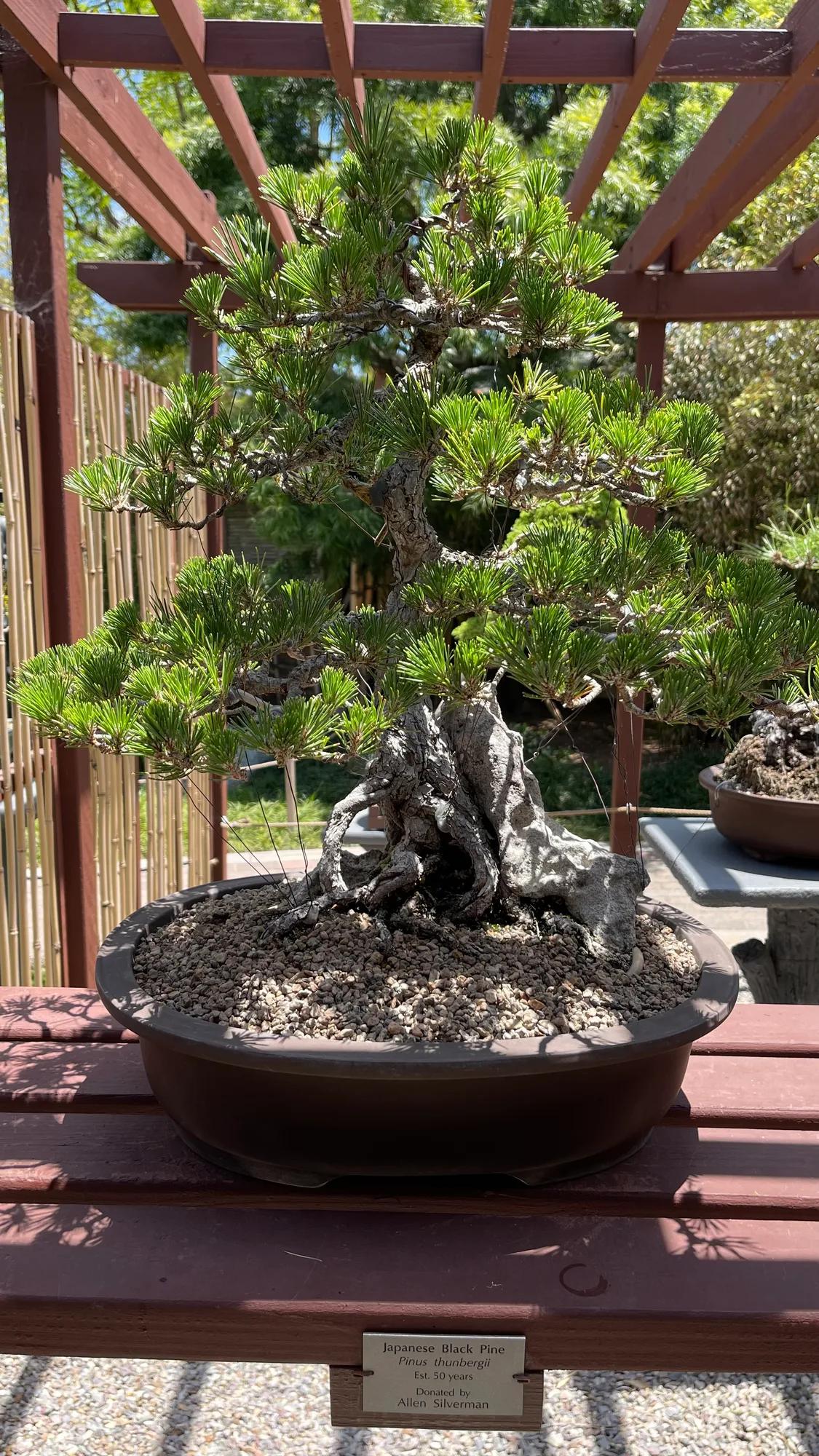
The easiest bonsai species for beginners are Chinese elm, ficus, dwarf jade and juniper, because each one tolerates the watering and pruning errors of a first year. Chinese elm is drought tolerant and copes with moist soil. Ficus grows well in indoor light. Dwarf jade stores water in its leaves. Juniper takes wiring well and gives the classic bonsai look, but only lives outdoors. The table sums up where each one belongs.
| Species | Lives | Why it is forgiving |
|---|---|---|
| Chinese elm | Outdoors, or a bright room | Drought tolerant and copes with moist sites, per NC State Extension |
| Ficus | Indoors, bright indirect light | Grows well in curtain filtered sun, per Clemson Extension |
| Dwarf jade | Indoors, or outdoors in warm months | Very drought tolerant, per Wisconsin Extension |
| Juniper | Outdoors only | Tough, takes wiring well, needs full sun |
Japanese maple and pine are beautiful and less tolerant. Leave them for a second tree.
Can Bonsai Live Indoors?#
Only some bonsai can live indoors. The Royal Horticultural Society describes indoor bonsai as "rather like houseplants", usually tropical or semi tropical species, and names Chinese elm and silver jade among the common choices. Temperate trees like juniper and pine need the outdoors all year, winter included. A juniper on a windowsill is one of the classic ways a first bonsai dies. With no outdoor space, choose a ficus.
Save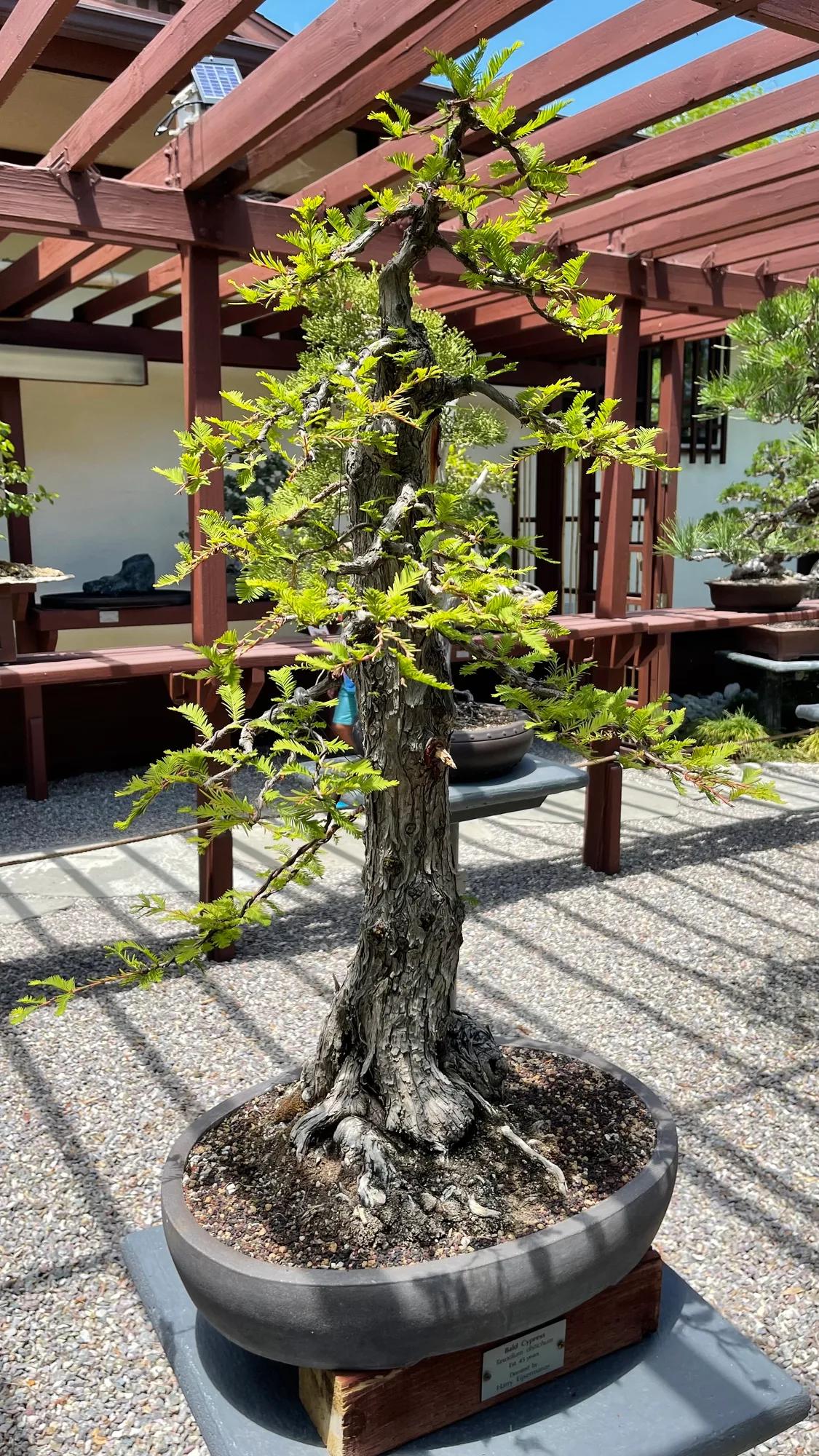 A bonsai on an outdoor display bench, where most classic species spend the whole year.
Indoors, the brightest window you have is the right spot. Clemson recommends bright indirect or curtain filtered sun for ficus. Dwarf jade wants more: Wisconsin Extension suggests a south facing window, and warns that too much direct sun turns the leaf tips yellow or red.
How Do You Water a Bonsai?#
Water a bonsai when the top layer of soil begins to feel a little dry, and keep going until water runs from the drainage holes. Virginia Cooperative Extension advises checking the soil daily and notes that more bonsai are killed by overwatering than by drying out. Shallow pots and a fast draining soil mix dry quickly, so a calendar does not work. Your finger does.
The RHS says a summer tree may need water once or twice a day, and Virginia Tech puts winter watering at about once a week. A moisture meter helps if you cannot tell by touch.
Dwarf jade is the exception. Wisconsin Extension warns it rots in soil that stays moist, so let it dry more, especially in winter.
What Soil Does a Bonsai Need?#
A bonsai needs a fast draining mix made for shallow pots, never ordinary garden or potting soil. The Royal Horticultural Society points beginners to the specialised mixes sold for bonsai, and extension services name slow drainage as the usual cause of root rot in container trees. Buy a ready made bonsai soil mix, then adjust by species: tropical trees accept a little more moisture, while junipers fail when the soil stays wet.
| Species | What the soil has to do | Source |
|---|---|---|
| Chinese elm | Drain freely in a shallow pot | No species guidance from RHS or extension services, follow the general rule |
| Ficus | Drain quickly, since slow drainage causes root rot | Clemson Extension |
| Dwarf jade | Very well drained, such as a cactus compost | RHS |
| Juniper | Drain well, because too much moisture is the usual cause of failure | NC State Extension |
No horticultural institution we checked publishes a fixed bonsai recipe. The blends hobbyists use, such as akadama, pumice and lava rock, follow the same principle: particles that hold some water while leaving air around the roots.
How Does Bonsai Care Change With the Seasons?#
Bonsai care follows the tree's growth cycle. Spring is for repotting, before new growth starts. Summer is for frequent watering and light feeding. Autumn is when growth slows and conifers can be pruned harder. Winter is a rest: outdoor trees need cold but protected roots, while indoor ficus and dwarf jade need warmth and less water. Getting the season right matters more for a beginner bonsai than any styling technique.
- Spring. The RHS advises repotting and root pruning in spring, ideally before new growth resumes.
- Summer. Check water daily, sometimes twice. The RHS suggests a balanced liquid feed at a low dose every two weeks in the growing season.
- Autumn. The RHS times major work on conifers and evergreens for autumn or winter. Deciduous trees such as Chinese elm are better pruned hard from late winter to early spring.
- Winter outdoors. Virginia Tech says bonsai must be protected in a greenhouse, pit or cold frame once winter drops below 28°F. Illinois Extension explains why: roots are far less cold hardy than trunks, and the little soil in a pot gets much colder than garden soil.
- Winter indoors. Ficus does best with nights of 65 to 70°F, per Clemson. A dwarf jade summered outside should come in when nights fall below 40°F, according to Wisconsin Extension.
Are Bonsai Trees Toxic to Cats and Dogs?#
Some beginner bonsai are toxic to cats and dogs, and the bonsai form changes nothing: a miniature tree has the same chemistry as a full sized one. The ASPCA lists ficus and jade plant as toxic. Juniper, Chinese elm and dwarf jade (Portulacaria afra) do not appear on its list at all. The ASPCA notes its list is not complete, so a missing species is unknown, not proven safe.
| Species | ASPCA listing |
|---|---|
| Ficus | Toxic to dogs and cats: gastrointestinal and skin irritation |
| Jade plant (Crassula) | Toxic to dogs and cats: vomiting, depression, incoordination |
| Dwarf jade, juniper, Chinese elm | Not listed |
Dwarf jade and jade plant are unrelated, says Wisconsin Extension, yet both get sold as "jade bonsai". No botanical name on the tag? Assume it is the toxic Crassula. The ASPCA also warns that eating any plant can make a dog or cat vomit. If a pet chews a bonsai, call your vet or the ASPCA Animal Poison Control Center at (888) 426-4435.
How Can You Tell a Bonsai Is in Trouble?#
A bonsai in trouble usually tells you through its leaves or needles weeks before it dies. Sudden leaf drop on a ficus, browning inner foliage on a juniper and shriveled leaves on a dwarf jade are the common early signs. The cause is almost always water or light. Check the soil and the spot before you prune anything. A stressed tree needs every leaf it has left.
- Ficus drops leaves. Clemson lists overwatering, underwatering, drafts, low light and lack of nitrogen. Weeping figs also shed after a move or a repot, so some leaf fall in a new home is expected.
- Juniper yellows or browns. Suspect wet soil first, the usual failure NC State Extension names for junipers, then shade.
- Dwarf jade leaves shrivel. It is thirsty. Wisconsin Extension uses wrinkling lower leaves as the winter cue to water.
- Wire marks on a branch. The wire is cutting in. Virginia Tech says wire should not stay on longer than one growing season.
What Should You Do in the First Year?#
In the first year, keep the tree alive and learn how it grows. That is the whole goal for a beginner bonsai. Watch how fast the soil dries in July compared with January. Notice where it pushes new shoots after a trim. Styling can wait. A tree that has settled into its spot and grown strongly for a full year handles wiring and heavy pruning far better than one bought last month.
Save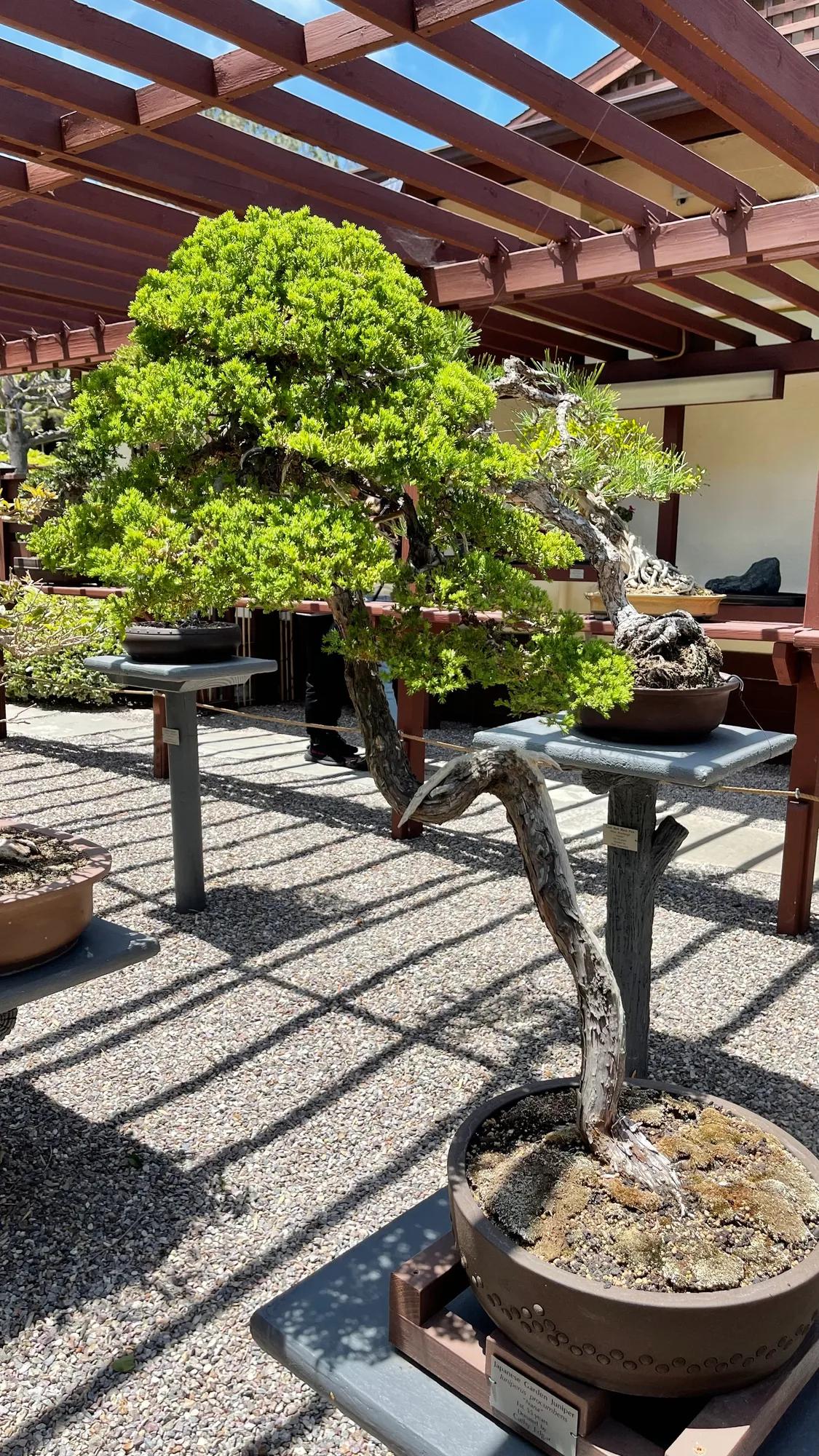 A tree like this one is decades of work. The first year is only about keeping a young tree alive.
- Put the tree in the right place for its species and leave it there.
- Learn its watering rhythm through one full cycle of seasons.
- Trim long shoots back to two or three leaves with bonsai shears during the growing season.
- Try wiring one or two branches, and remove the wire before it bites into the bark.
- Repot in early spring only if roots circle the pot, moving to a training pot with fresh mix.
What Mistakes Kill Most First Bonsai?#
Most first bonsai die from placement and watering, not from styling. The usual causes are an outdoor species kept inside, soil left to dry out completely, dense potting soil that stays wet, and repotting at the wrong time of year. Overwatering is the most common of all, according to Virginia Tech. Start with a healthy nursery tree of a forgiving species and get those four things right.
For a smaller project that teaches the same watering habits, try kusamono.

Save This Guide
Keep It for Your Next Plant Day
Pin it to find it again, or send it to someone growing the same plant. Every like tells us what to write next.
What You Need
- See Options
Beginner Bonsai Tool Kit
Shears, concave cutter and wire cutter.
- See Options
Bonsai Soil Mix
Akadama, pumice and lava rock, free draining.
- See Options
Aluminum Bonsai Wire
Soft enough for a first attempt at shaping.
- See Options
Bonsai Training Pot
Shallow, with drainage holes and room to grow.
- See Options
Soil Moisture Meter
Checks moisture below the surface before you water.
Links in this list are affiliate links.
Common Questions
- Can a juniper bonsai live indoors?
- Not for long. Junipers are outdoor trees. Virginia Cooperative Extension says junipers and pines need full sun all day, which no room can give them. Kept inside, a juniper declines slowly and can look fine until it is already dead.
- How often should you water a bonsai?
- When the top of the soil begins to feel a little dry. In summer that can be once or twice a day, in winter about once a week. Check every day and water thoroughly when it needs it, never on a fixed schedule.
- Which beginner bonsai are toxic to cats and dogs?
- The ASPCA lists ficus and jade plant (Crassula) as toxic to cats and dogs. Juniper, Chinese elm and dwarf jade (Portulacaria afra) are not on its list, which does not prove they are safe. Keep any bonsai out of reach of a pet that chews leaves.
- What is the best bonsai for an apartment?
- A ficus or a dwarf jade, placed close to a bright window. Both are tropical or subtropical plants that the Royal Horticultural Society and university extension services describe as suited to indoor growing. Chinese elm also works indoors if the light is strong.
Written By
Gustavo Girard
Gustavo Girard is a product designer, and plants are the hobby. It runs in the family: both of Gustavo's parents are passionate about plants too. At home that means variegated monsteras, closed terrariums and bonsai, each one built with the same creativity that goes into designing a product. Every guide comes from that practice and is checked against university extension services, botanical gardens and the ASPCA plant list. Last reviewed on .