Monstera Thai Constellation vs Albo: Differences and Care
How to tell a Thai Constellation from a Monstera Albo by color, pattern and stability, and how the care of each one differs from a green monstera.
By Gustavo Girard. Updated . 6 min read.
This guide contains affiliate links. If you buy through one, GrowPlants may earn a commission at no extra cost to you. Read the Disclosure
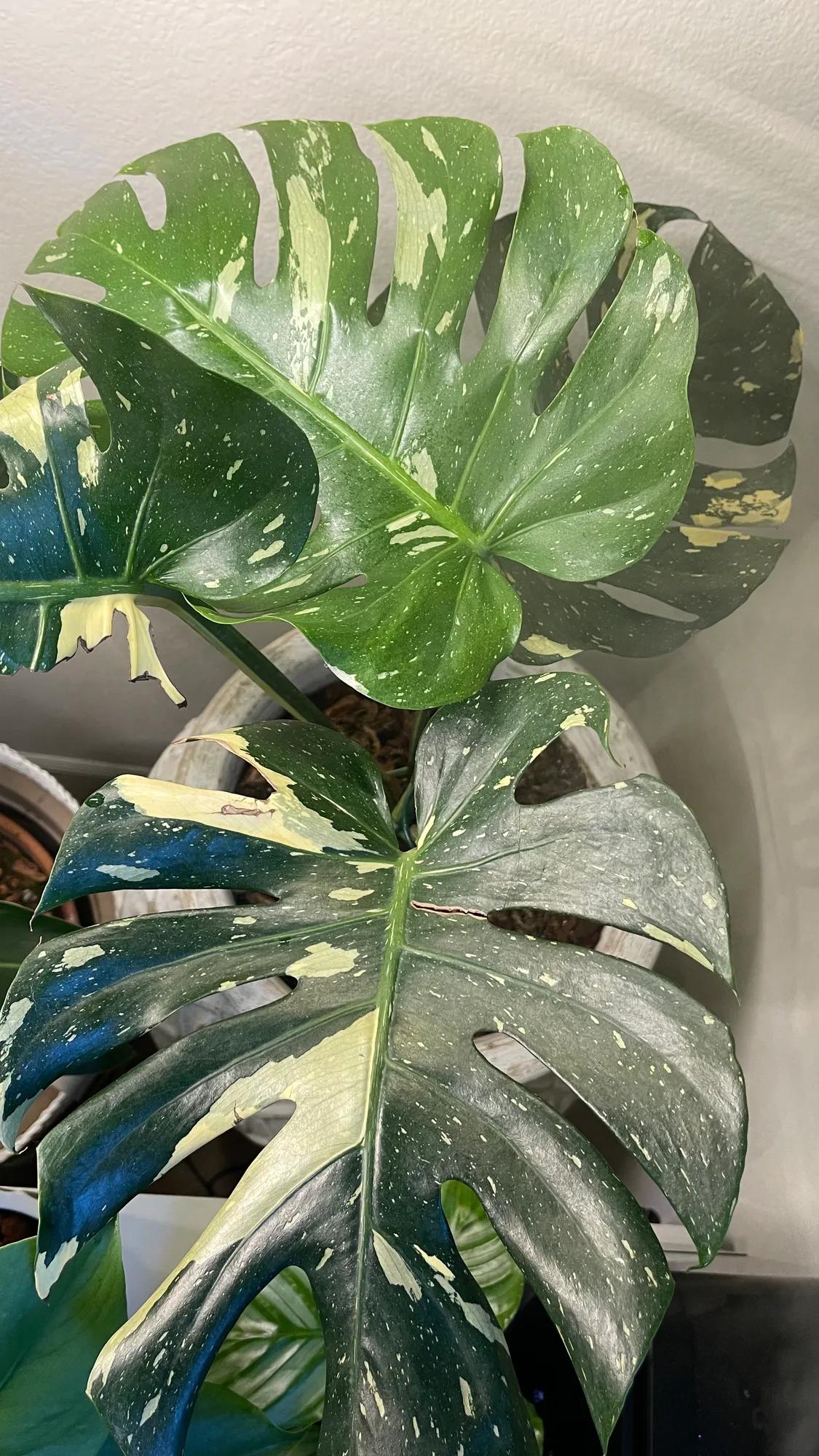
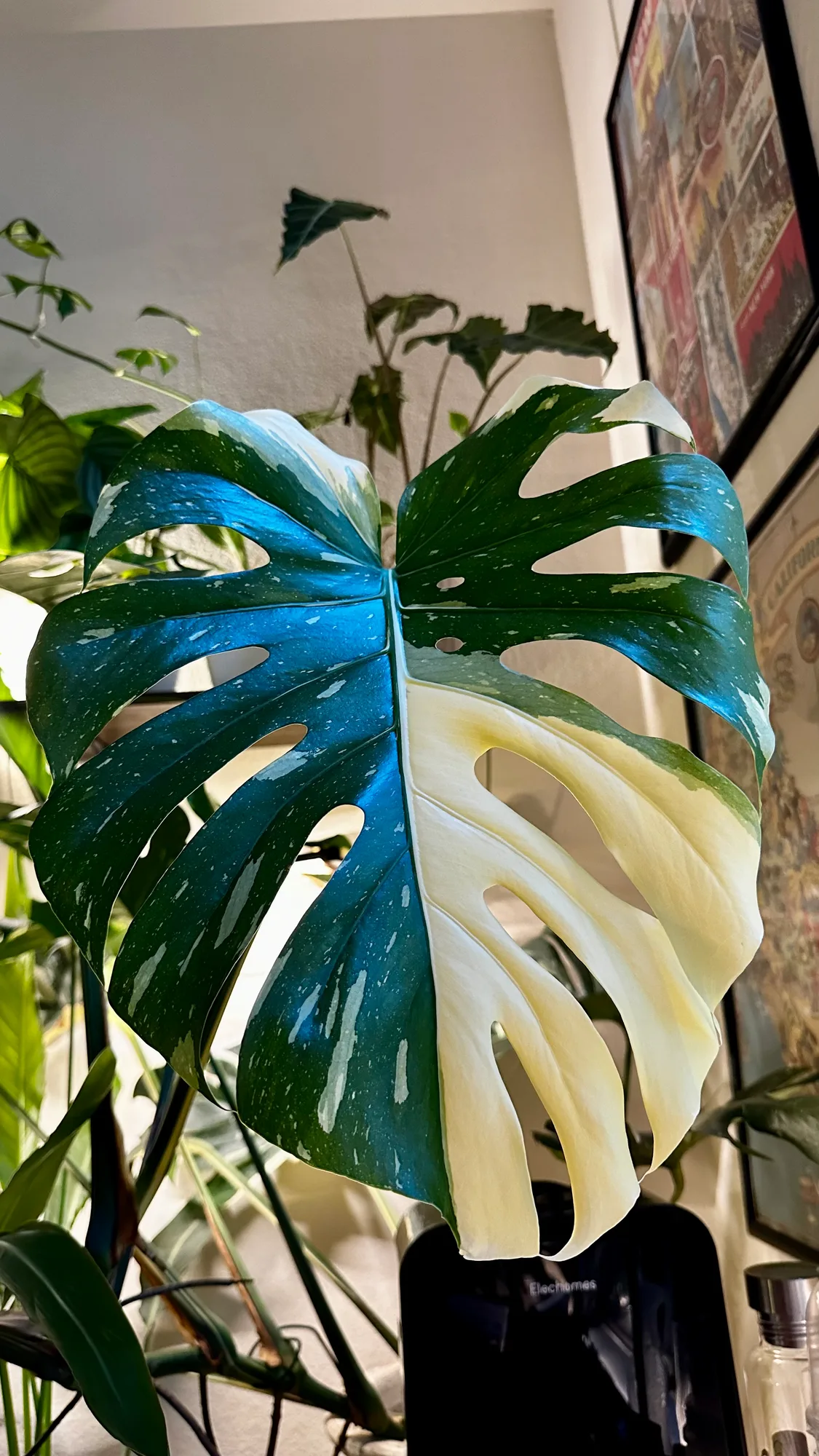
The quickest way to tell them apart is color and pattern. A Thai Constellation has cream to pale yellow speckles scattered across the leaf like stars, and the pattern is stable. A Monstera Albo has pure white variegation in large blocks and marbled sectors, and the pattern is unstable, so every new leaf is different. That one difference in stability shapes how you care for each.
What Is the Difference Between Thai Constellation and Albo?#
Thai Constellation and Albo differ in color, pattern, stability and how they are produced. Both are variegated forms of Monstera deliciosa, as Penn State Extension notes. Thai Constellation has creamy speckled variegation spread through the whole plant and is multiplied by tissue culture. Albo has bright white sectors from an unstable mutation and is propagated from cuttings, which is why it has historically cost more.
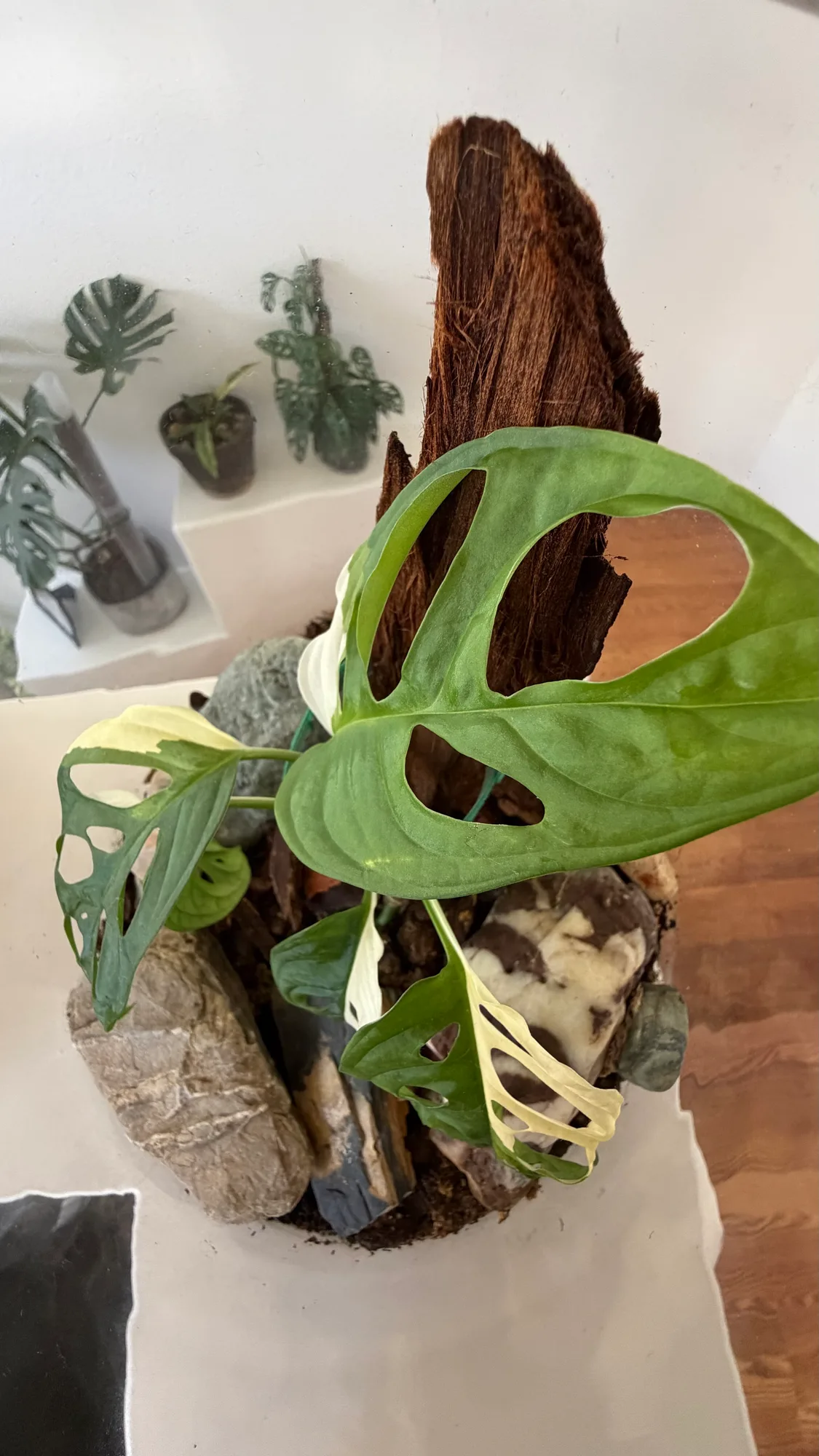
Save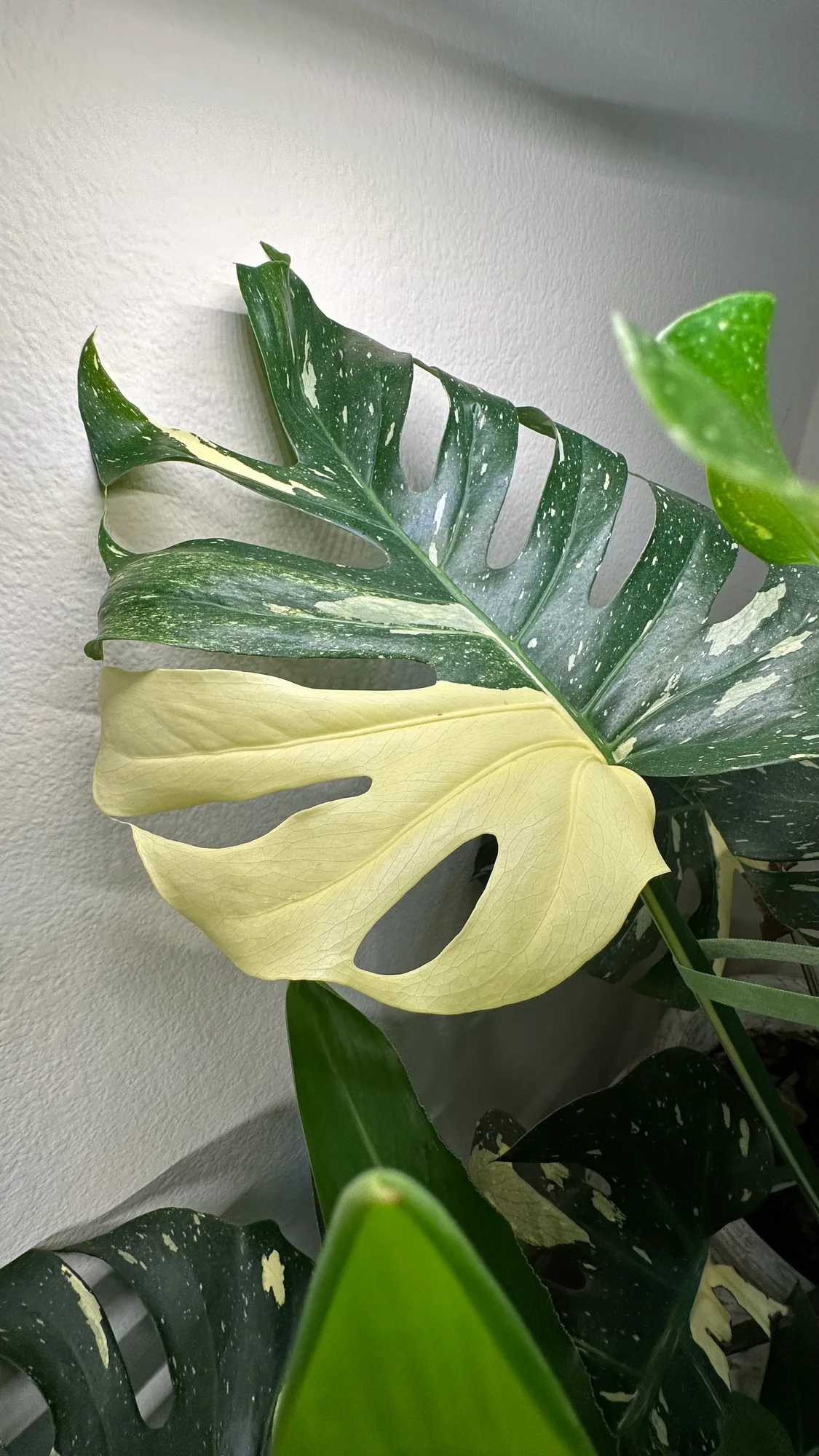 A half moon leaf, where one side of the blade carries no green at all.
| Thai Constellation | Albo | |
|---|---|---|
| Color | Cream to pale yellow | Pure white |
| Pattern | Fine speckles and splashes | Blocks, half moons, marbling |
| Stability | Described as stable | Unstable, can revert |
| Produced by | Mainly tissue culture | Mainly cuttings |
| Growth | Compact, shorter gaps between leaves | Vining, longer gaps between leaves |
The RHS describes Thai Constellation leaves as deep green splashed and streaked with creamy white, and Penn State notes it is fuller and more compact because of shorter internodes.
Why Does Monstera Albo Revert?#
Monstera Albo reverts because its variegation is unstable: the growing point carries a mix of normal and chlorophyll free cells, and as it divides it can drift toward all green or all white shoots. University of Florida horticulturists describe this behavior in sectorial chimeras. Albo's pattern fits that description closely. Published research on monstera variegation itself is limited, though, so read this as the best available explanation rather than a settled one.
The RHS explains why reverted shoots matter: with more chlorophyll they grow more vigorously and can take over a plant, so they should be cut back into growth that still carries variegation. All white shoots are weak and do not take over, but on a monstera they cannot feed themselves, so a run of white leaves is also a reason to cut back.
Is Thai Constellation Variegation Really Stable?#
Thai Constellation variegation is widely described as stable, but the evidence is mostly from growers rather than published genetics. Costa Farms, a major producer, says its variegation is stable and contrasts it with Albo, which it calls notoriously unstable. We could not find a peer reviewed study that explains the genetic basis, so treat stability as reliable in practice rather than proven.
What is documented is how it is made. A 2023 University of Florida study in Horticulturae worked on micropropagation of 'Thai Constellation' in bioreactors, noting that it has become a new favorite in the foliage market and that growers have difficulty producing it at large scale.
How Much Light Do Variegated Monsteras Need?#
Variegated monsteras need more light than green ones, because the white and cream parts of the leaf contain no chlorophyll and make no food. Give both plants bright, indirect light for most of the day, such as a position near an east or south facing window with sheer curtains. Direct sun scorches the pale areas first. In a dim room, a full spectrum grow bulb placed above the plant makes up the difference.
Save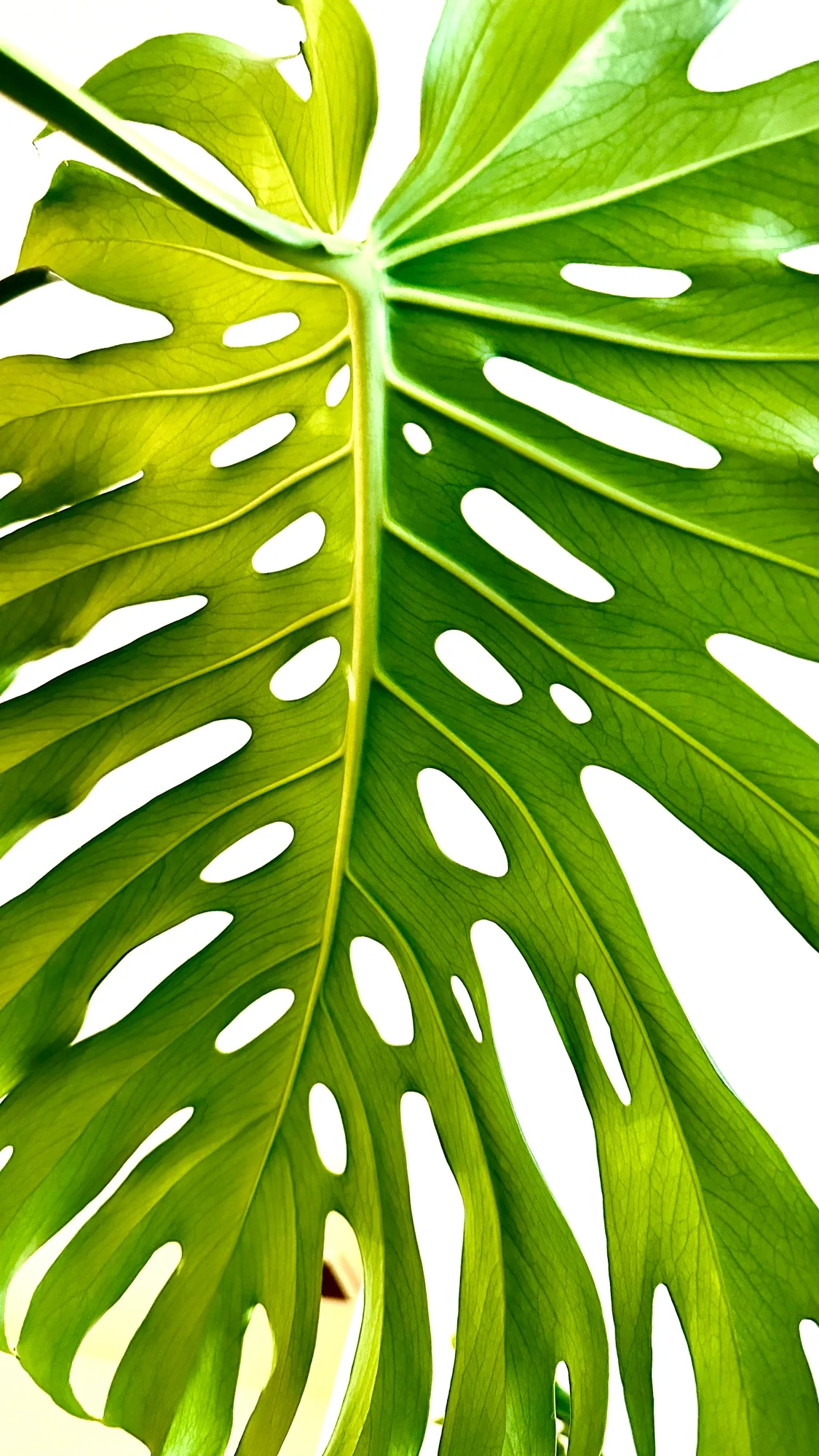 A fully green leaf for comparison. White tissue has no chlorophyll, so it adds no energy to the plant.
Penn State Extension recommends bright light but not direct sun and warns that monstera gets leggy in lower light. Wisconsin Horticulture Extension adds that leaves will not develop their holes when light is inadequate. In winter the sun is weaker, and Costa Farms says an acclimated Thai Constellation can take some direct morning sun.
How Should You Water and Pot Them?#
Water a variegated monstera when the top two inches of the mix are dry, and pot it in a chunky aroid mix that drains in seconds. Both plants grow slower than a green monstera and use less water, so the usual mistake is watering on a schedule. Thai Constellation in particular is prone to root rot in dense, wet soil. A moss pole gives either plant something to climb, which leads to larger leaves.
Penn State Extension says to let the top 1 to 2 inches dry between waterings and warns that overwatering causes root rot. For Thai Constellation, the RHS advises watering while it is in growth and keeping it just moist in winter.
What Soil Is Best for a Variegated Monstera?#
The best soil for a variegated monstera is a well draining mix rich in organic matter, opened up with bark or perlite so the roots get air. Penn State Extension recommends a well draining soilless mix with a neutral pH between 6.0 and 8.0, and notes that bark, perlite or charcoal can be added to a bought mix. For Thai Constellation, the RHS suggests a peat free, loam based potting compost with bright, indirect light.
| Component | What it does |
|---|---|
| Well draining potting mix | The base, holds water and nutrients |
| Orchid bark or chunky aroid mix | Opens air pockets around thick roots |
| Perlite | Keeps the mix from compacting |
Neither source fixes proportions. Many growers start from roughly equal parts of the three and adjust: more bark if the pot stays wet, more potting mix if it dries within a day or two.
Why Do the White Parts Turn Brown?#
White sections brown because they are the weakest tissue on the plant. They cannot feed themselves, and they show stress first, whether it comes from dry air, a missed watering or an afternoon of direct sun. Some browning on very white leaves is unavoidable. To limit it, keep humidity above 50 percent with a small humidifier, check it with a hygrometer and keep watering consistent.
Penn State Extension says monstera prefers humidity above 50 percent, and Wisconsin Extension notes that leaf edges turn brown when humidity is too low.
Which Pests Should You Watch For?#
Thai Constellation and Albo attract the same pests as any monstera. The RHS lists scale insects and red spider mite for Thai Constellation, and Penn State Extension adds aphids, mealybugs, thrips and fungus gnats. Turn a few leaves over once a week. Spider mites are so small that the damage is usually the first thing you see, and adult scale insects sit still on the stems and leaves like tiny bumps with no visible legs.
Clemson HGIC suggests a cotton swab dipped in rubbing alcohol for mealybugs, a fingernail for young scale and a strong rinse for spider mites. Insecticidal soap usually takes more than one round. Quarantine any new plant for six weeks, as Clemson advises, before it shares a shelf with a monstera you paid for.
Are Thai Constellation and Albo Toxic to Pets?#
Yes, both Thai Constellation and Albo are toxic to cats and dogs. They are cultivars of Monstera deliciosa, which the ASPCA lists under Mexican breadfruit and split leaf philodendron as toxic to dogs and cats. The toxic principle is insoluble calcium oxalates. The ASPCA lists the signs as oral irritation, intense burning of the mouth, tongue and lips, excessive drooling, vomiting and difficulty swallowing.
Keep the plants out of reach and wear gloves when pruning, since Penn State Extension warns the sap can cause contact dermatitis. If a pet chews a leaf, call your veterinarian or the ASPCA Animal Poison Control Center at (888) 426-4435.
Which One Should You Buy First?#
For a first variegated monstera, Thai Constellation is the safer choice. You will not spend the next year cutting back green shoots, and tissue culture has made it far easier to find. Choose Albo if you want the high contrast white and accept that you will be managing the plant, pruning it to keep the variegation balanced. If you plan to multiply either one, read the guide to propagating a variegated monstera first.
Prices for both move fast and depend on leaf count and how much variegation the plant shows. With Albo, judge the stem and the newest leaf in front of you, not the seller's photo of its best leaf.

Save This Guide
Keep It for Your Next Plant Day
Pin it to find it again, or send it to someone growing the same plant. Every like tells us what to write next.
What You Need
- See Options
Chunky Aroid Potting Mix
Bark, perlite and coir, drains fast and holds air.
- See Options
Moss Pole
Support that lets a monstera climb and size up.
- See Options
Small Room Humidifier
Holds humidity up for thin, variegated leaves.
- See Options
Digital Hygrometer
Shows humidity and temperature where the plant sits.
- See Options
Full Spectrum Grow Bulb
Fits a standard lamp socket.
Links in this list are affiliate links.
Common Questions
- Which is easier to care for, Thai Constellation or Albo?
- Thai Constellation is generally easier. Its variegation is described as stable, so you do not have to manage reverting or all white growth, though it is sensitive to overwatering.
- Can a Monstera Albo turn fully green?
- Yes. Albo variegation is unstable and a stem can revert to green. Cutting back to the last node that showed balanced variegation gives the plant a chance to variegate again.
- Why is Monstera Albo more expensive than Thai Constellation?
- Mostly because of supply. Albo is usually multiplied from cuttings, one node at a time, while Thai Constellation is produced by tissue culture in larger numbers. Prices vary widely by leaf count and how much variegation a plant shows.
- Are variegated monsteras toxic to pets?
- Yes. The ASPCA lists Monstera deliciosa as toxic to cats and dogs because of insoluble calcium oxalates, which cause oral irritation, drooling, vomiting and difficulty swallowing. Keep them out of reach and call a veterinarian or the ASPCA Animal Poison Control Center at (888) 426-4435 if a pet chews one.
Written By
Gustavo Girard
Gustavo Girard is a product designer, and plants are the hobby. It runs in the family: both of Gustavo's parents are passionate about plants too. At home that means variegated monsteras, closed terrariums and bonsai, each one built with the same creativity that goes into designing a product. Every guide comes from that practice and is checked against university extension services, botanical gardens and the ASPCA plant list. Last reviewed on .