How to Build a Closed Terrarium, Layer by Layer
The five layers of a closed terrarium in order, how deep each one should be, which plants stay small and how much water to add before you seal it.
By Gustavo Girard. Updated . 7 min read.
This guide contains affiliate links. If you buy through one, GrowPlants may earn a commission at no extra cost to you. Read the Disclosure
A closed terrarium is a jar that waters itself. The classic build has five layers, from the bottom up: drainage, a mesh barrier, charcoal, substrate and plants. Two of those layers are optional, as it turns out. The first watering is not. Add too much and the glass streams for weeks; add just enough and the lid can stay on for months.
What Are the Layers of a Closed Terrarium?#
The classic closed terrarium has five layers. A drainage layer of clay pebbles or gravel sits at the bottom, although some extension services now treat it as optional. A mesh barrier goes on top of it. A thin layer of charcoal comes next, then the substrate where roots grow, and finally the plants, moss and any stones or wood. Each layer does one job, and the order matters because water has to move down and stay down.
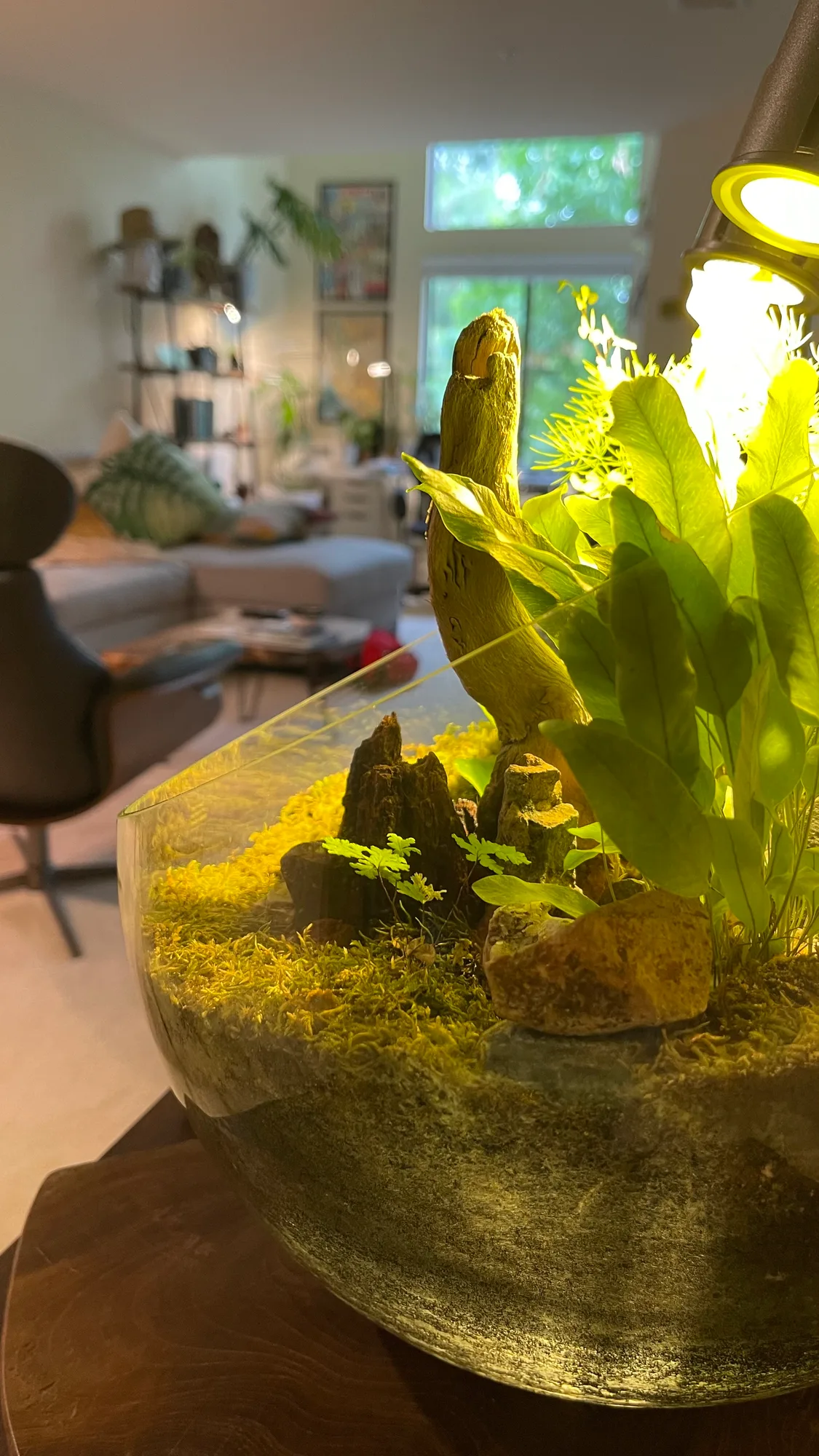
Save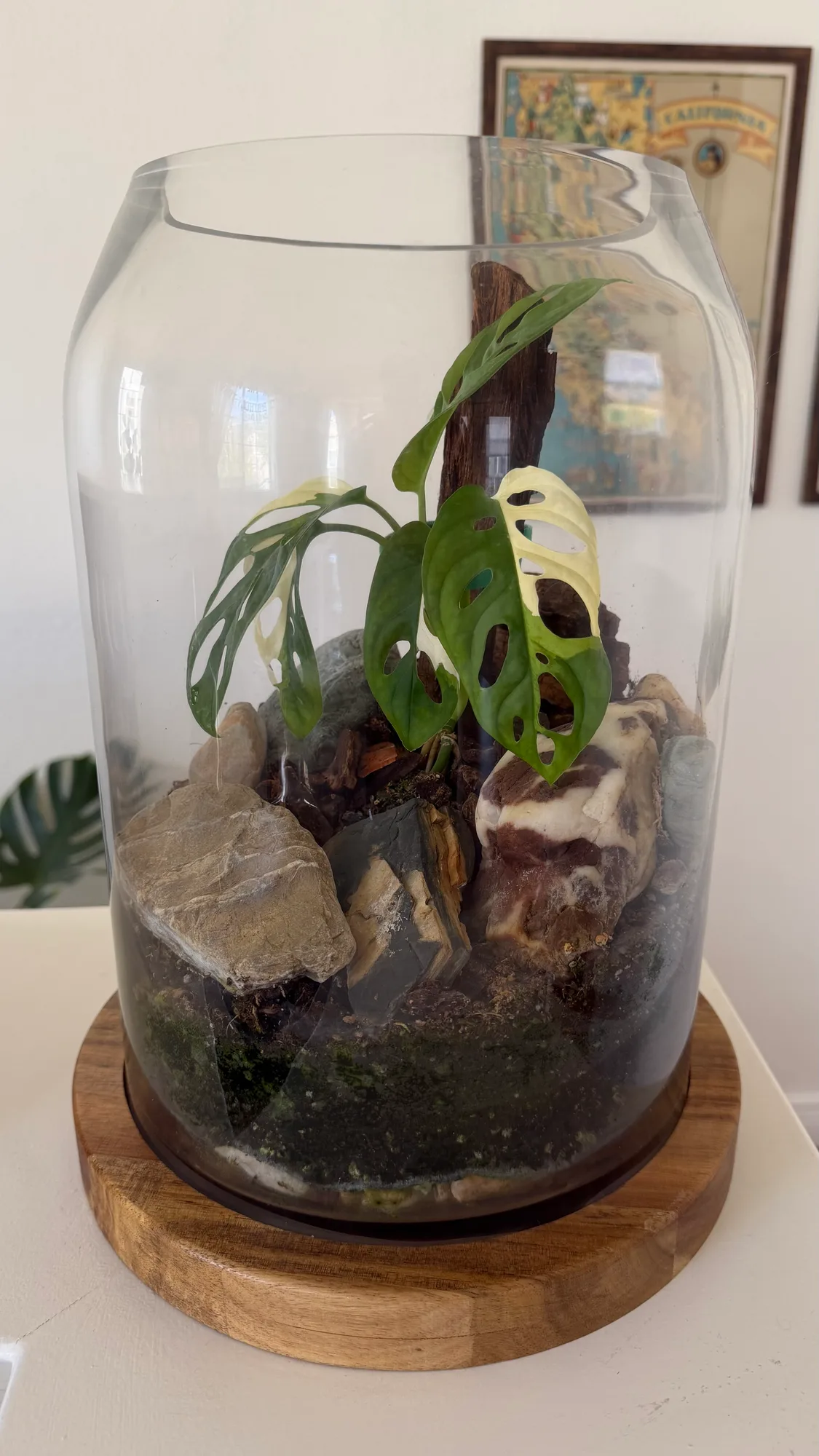 Stones and dark substrate visible through the side of a tall glass jar.
| Layer | Material | Depth |
|---|---|---|
| Drainage | LECA clay pebbles or gravel | 1 to 2 in |
| Barrier | Mesh screen cut to fit | One sheet |
| Charcoal | Horticultural charcoal, optional | 1/4 to 1/2 in, or a thin scatter |
| Substrate | Terrarium mix | 2 to 4 in |
| Planting | Plants, moss, stone, wood | To taste |
Depths vary by guide: Mississippi State Extension uses 1 inch of gravel and about 2 inches of mix, Iowa State Extension 2 inches of gravel and 1 to 4 inches of soil. Keep all layers under a third of the jar.
Is a Drainage Layer Really Necessary?#
A drainage layer is optional, and the sources disagree about it. Clemson Extension recommends pea gravel at the bottom with a half inch of horticultural charcoal above it. Penn State Extension says a rock layer is no longer thought to improve drainage, and recommends a soilless potting mix with relatively low fertility, as deep as the largest root ball. Both agree on what matters most: a clean, well drained substrate and very little water.
A University of Minnesota Extension article by a Master Gardener volunteer explains why some growers skip the pebbles: they create a perched water table, where water lingers above the stone, and that can lead to root rot. In a jar with no hole, gravel is a small reservoir. It is not drainage. Skip it and you simply have less room for error, so water even more lightly.
Does Charcoal Really Purify a Terrarium?#
Charcoal does not purify a closed terrarium in any measured way, and the evidence for it is thin. Extension guides describe modest benefits: Clemson says it keeps the soil from developing a sour smell, Penn State says it absorbs chemicals or odors, and Mississippi State says it filters water percolating down from the soil. None of them cites a study.
We found no peer reviewed study testing charcoal in a sealed terrarium, so treat it as hobby convention. It is harmless and may help with smell, but it will not rescue a jar that holds too much water. A thin layer is enough, or a handful mixed into the substrate as Penn State suggests.
Which Jar Works Best?#
The best jar for a first closed terrarium is clear glass with a wide opening and a lid that seals. A wide mouth lets your hand or long tools reach the bottom, and clear glass lets in the light the plants need. Tinted or textured glass cuts light and hides problems. Wash the jar with hot water and let it dry before you start, since Iowa State recommends starting with a clean, dry container.
What Substrate Should a Closed Terrarium Use?#
A closed terrarium needs a light, clean, soilless substrate that holds moisture without ever turning to mud. Penn State Extension recommends a soilless potting mix with relatively low fertility and warns that garden soil is too heavy and compacts. The RHS suggests peat-free multipurpose compost mixed with a drainage material such as horticultural grit, topped with cushion or sphagnum moss.
Low fertility is deliberate: Mississippi State says a closed system needs no fertilizer, and slow growth means less pruning. A terrarium mix or a bagged potting mix opened with grit both work.
Which Plants Suit a Closed Jar, and Which Fail?#
Plants for a closed terrarium need to like constant humidity, tolerate bright indirect light and grow slowly. The RHS names small, slow growing foliage plants, miniature ferns and mosses as ideal, with peperomias, fittonias, hypoestes, pileas, small-leaved ferns, Cryptanthus and Selaginella kraussiana as examples. Buy them in the smallest pots available, and leave space between them, because a jar that looks sparse on day one fills in within months.
Some plants reliably fail in a sealed jar:
- Succulents and cacti. Penn State and Mississippi State say they rot in a closed container.
- Flowering plants. The RHS advises against them in closed jars.
- Ordinary tropical houseplants. The RHS warns many are too vigorous in the long term.
- Full size ferns. Clemson says ferns take over. The RHS and Penn State recommend them, so choose miniature or small-leaved species.
Are Terrarium Plants Safe for Cats and Dogs?#
Most classic closed terrarium plants are listed as non-toxic to cats and dogs by the ASPCA. Creeping fig is the exception to watch for. A lid keeps a cat's teeth off the leaves until the jar gets knocked over or the lid comes off for airing, so check the plants before you buy. The ASPCA adds that any plant material may cause vomiting and stomach upset if eaten.
| Plant | ASPCA listing |
|---|---|
| Nerve plant (Fittonia) | Non-toxic to dogs and cats |
| Peperomia | Non-toxic, for example Peperomia obtusifolia and Peperomia caperata |
| Polka dot plant (Hypoestes) | Non-toxic to dogs and cats |
| Pilea | Non-toxic for Pilea cadierei and Pilea nummulariifolia. Pilea depressa has no ASPCA entry. |
| Selaginella kraussiana | Non-toxic to dogs and cats, listed as tropical or cushion moss |
| Boston fern | Non-toxic to dogs and cats. Many other small ferns have no entry. |
| True mosses | Not on the ASPCA list |
| Creeping fig (Ficus pumila) | No separate entry. The ASPCA lists Ficus species as toxic to dogs and cats, so treat it as toxic. |
If a pet chews a plant you cannot identify, call your veterinarian or the ASPCA Animal Poison Control line at (888) 426-4435.
How Do You Plant It?#
Plant a terrarium from the largest element to the smallest. Place stones and wood first, since they are hard to move later. Make a hole in the substrate for each plant, loosen the root ball, set it in and firm the mix around it. Add moss last, pressing it onto bare substrate. Clean soil off the glass with a damp cloth, because anything left on the inside stays there.
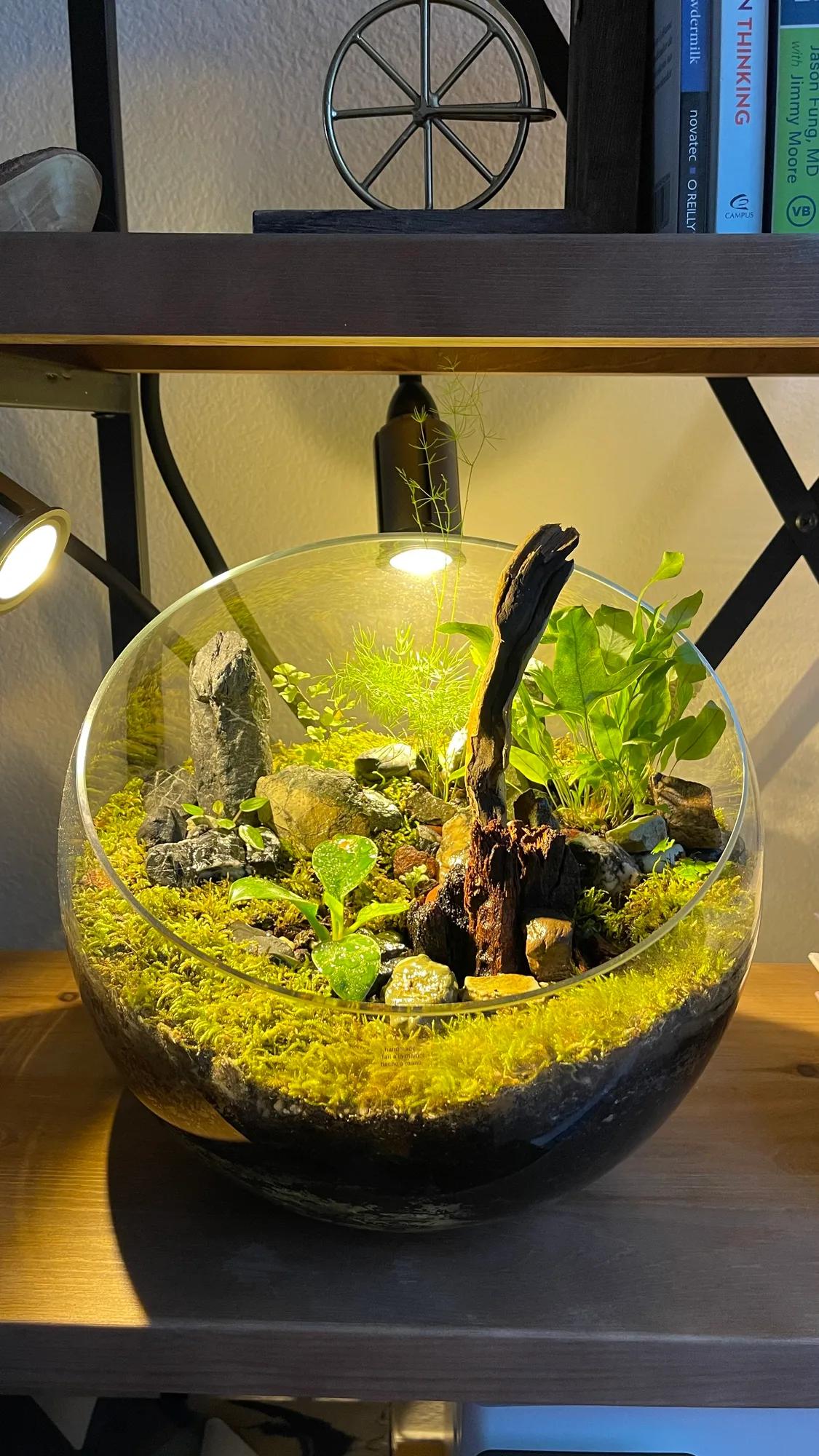
Save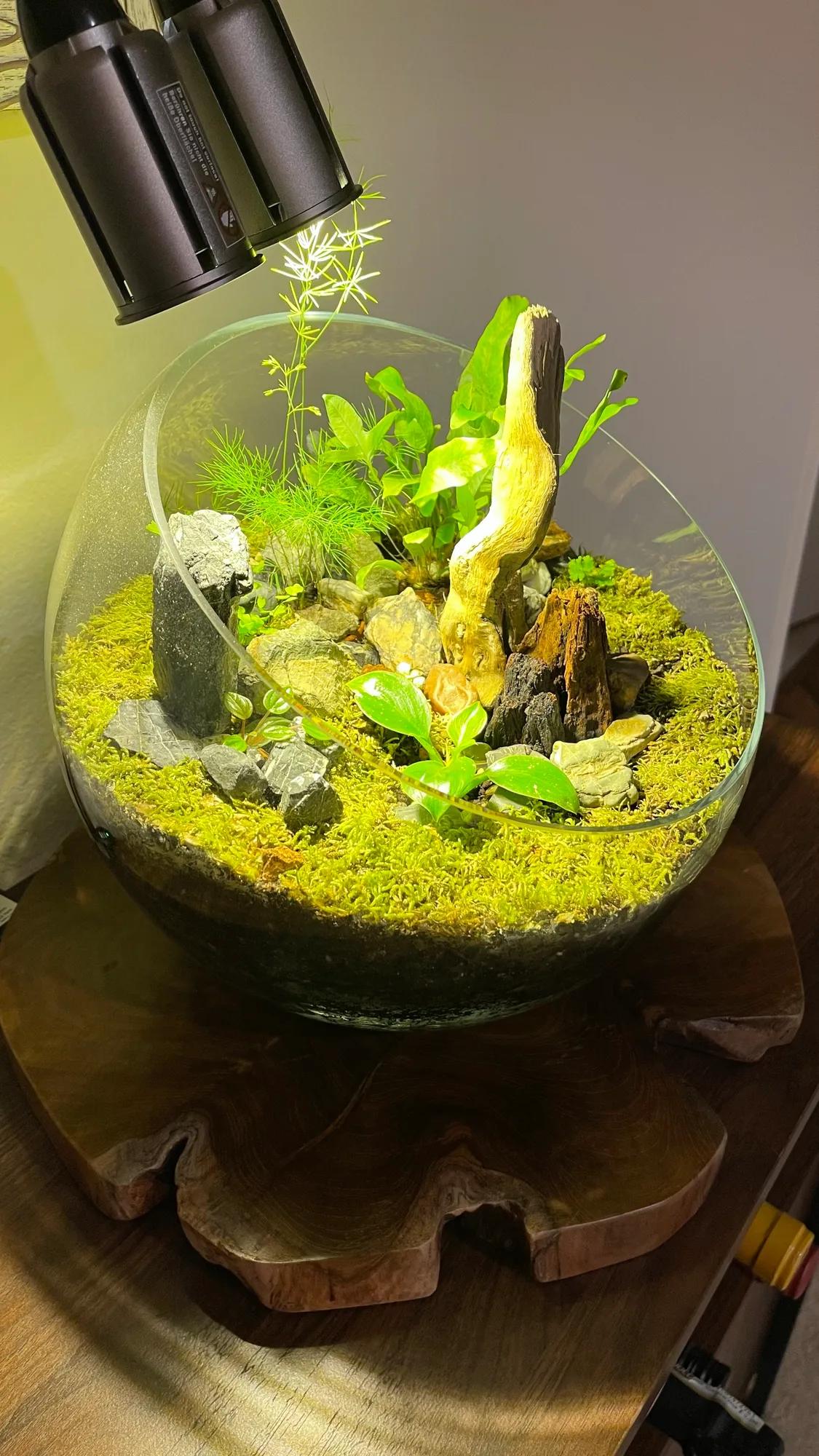 Stones and driftwood set into the moss layer, with small plants tucked between them.
Keep leaves off the glass. Mississippi State says foliage resting against it holds moisture and invites disease. And skip the pretty branch from the park: Iowa State warns that wood collected outdoors can bring in insects and fungi.
How Much Water Does It Need Before Sealing?#
A closed terrarium needs far less water than a pot. Use a fine mist bottle and add water until the substrate is evenly damp, never until water collects in the drainage layer. If you see water pooling among the pebbles, you have added too much, so leave the lid off for a day or two. Then seal the jar and watch it for a week.
Mississippi State puts it simply: water can be added but not drained. Light morning fog that clears later means the balance is right, and the RHS reads no condensation as a sign the jar may need water. Glass wet all day means too much, covered in the guide to foggy and moldy terrariums.
What Does a Closed Terrarium Maintenance Schedule Look Like?#
A closed terrarium maintenance schedule is short, because a balanced jar does most of the work itself. The first weeks need the most attention: Penn State notes that diseases typically become established within the first few weeks, so check daily for rot and fog. After that, a glance each week and a tidy up each month is usually enough, with water only a few times a year.
- First week. Check the glass twice a day. Open the lid if it never clears.
- Monthly. Remove dead leaves promptly, which the RHS says prevents rot and mold, and trim anything touching the glass.
- Every few months. Water only when fog stops. Clemson and Illinois Extension both estimate four to six months.
- Optional. Penn State notes some experts open the lid for up to 15 minutes weekly.
Mississippi State gives a typical display life of one or two years before replanting.
What Are the Most Common Closed Terrarium Mistakes?#
Most closed terrarium mistakes happen in the first week, and most of them involve water. The hard part is the delay. A sealed jar reacts slowly, so a jar flooded on Sunday may not show streaming glass or a soft stem until the following weekend, when the cause is no longer obvious. The five below are the ones the extension guides cited here warn about directly.
- Pouring instead of misting. Water you cannot remove rots roots.
- A sunny windowsill. Penn State says a jar in direct sun will cook.
- Garden soil. It compacts and may carry pathogens.
- Overcrowding. Crowded plants spread disease.
- The wrong plants. Succulents and fast growers fail within months.

Save This Guide
Keep It for Your Next Plant Day
Pin it to find it again, or send it to someone growing the same plant. Every like tells us what to write next.
What You Need
- See Options
Glass Terrarium Jar With Lid
Clear glass, wide opening, a lid that seals.
- See Options
LECA Clay Pebbles
Drainage layer that keeps roots out of standing water.
- See Options
Terrarium Mesh Barrier
Keeps the soil from washing into the drainage layer.
- See Options
Horticultural Charcoal
A thin layer between drainage and soil.
- See Options
Terrarium Substrate Mix
Airy, moisture holding mix made for closed jars.
- See Options
Long Terrarium Tool Kit
Tweezers, scissors and a small rake that reach the bottom.
- See Options
Fine Mist Spray Bottle
Adds water a few milliliters at a time.
Links in this list are affiliate links.
Common Questions
- How often do you water a closed terrarium?
- Rarely. Clemson and Illinois Extension both estimate every four to six months for a sealed jar, and the RHS says a few times a year. Add a few sprays only when the glass stops fogging and the substrate feels dry.
- Does a closed terrarium need charcoal?
- No. Extension services describe charcoal as a way to reduce odors, but no controlled study shows it purifies a sealed jar, and many builders skip it. Clean materials and restraint with water matter far more.
- Do you need rocks at the bottom of a terrarium?
- Not necessarily. Several extension services still recommend a gravel layer, while Penn State Extension says rocks are no longer thought to improve drainage. If you skip it, water even more sparingly.
- Which plants should not go in a closed terrarium?
- Succulents and cacti, which rot in constant humidity, flowering plants, and vigorous tropical houseplants that outgrow the jar. Choose small, slow, humidity loving foliage plants and mosses instead.
- Where should a closed terrarium sit?
- In bright, indirect light, such as a spot near a window that never gets direct sun. Direct sun through glass heats the jar fast and can cook the plants in an afternoon.
Written By
Gustavo Girard
Gustavo Girard is a product designer, and plants are the hobby. It runs in the family: both of Gustavo's parents are passionate about plants too. At home that means variegated monsteras, closed terrariums and bonsai, each one built with the same creativity that goes into designing a product. Every guide comes from that practice and is checked against university extension services, botanical gardens and the ASPCA plant list. Last reviewed on .