How to Propagate a Variegated Monstera
Where to cut a variegated monstera, how to pick a node that keeps its variegation, which rooting method to use and when the cutting is ready for soil.
By Gustavo Girard. Updated . 6 min read.
This guide contains affiliate links. If you buy through one, GrowPlants may earn a commission at no extra cost to you. Read the Disclosure
To propagate a variegated monstera, cut the stem so the cutting includes at least one node, root it in water, sphagnum moss or perlite, and pot it once the roots are a few inches long. With an Albo, the node you choose decides whether the new plant stays variegated, so selecting where to cut matters more than the rooting method.
Where Do You Cut a Monstera for Propagation?#
Cut a monstera on the stem, below a node. The node is the thickened ring where a leaf stalk meets the stem, and it usually carries a brown aerial root and a small growth point. Each cutting needs one node, and a cutting with one leaf and an aerial root establishes fastest. Use clean, sharp pruning snips and wipe the blades with alcohol first, since a cut is an open door for rot.
University of Minnesota Extension says to cut 1 to 2 inches below the node, along the internode, and stresses that the node must carry an axillary bud. Cuttings without one, such as a single leaf, will not produce new growth and eventually rot. It also notes that more than one leaf on a cutting helps it root, because the leaves keep photosynthesizing.
Does a Monstera Cutting Need an Aerial Root?#
A monstera cutting does not need an aerial root, but it does need a node. The node holds the bud that becomes the new stem, while the aerial root is a climbing and anchoring organ that NC State Extension describes the plant using to attach itself to trees. Growers still prefer a node with a short aerial root on it. That root often keeps growing once it sits in water or moss, which gives the cutting a head start.
A long aerial root on a bare stretch of stem is a trap. Without a node, it cannot make a new plant.
How Do You Choose a Node That Stays Variegated?#
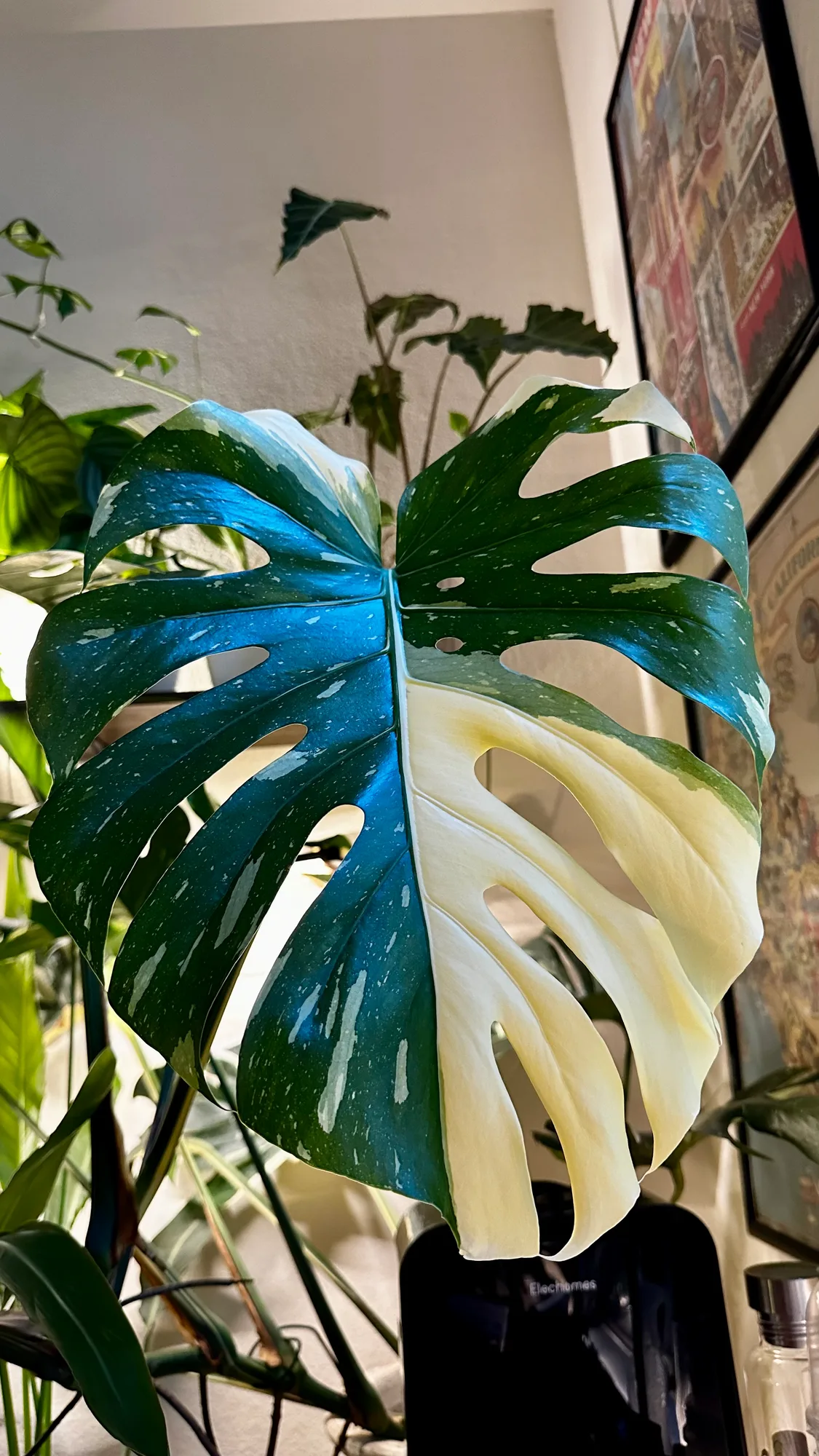
Choose a node where the stem itself shows both green and white. On a Monstera Albo, the new shoot grows from a bud on the stem, and it tends to carry the color of the stem tissue beside that bud. Balanced striping is the best sign. A fully green section usually produces green leaves. A fully white section produces white leaves that cannot feed the plant and eventually fail.
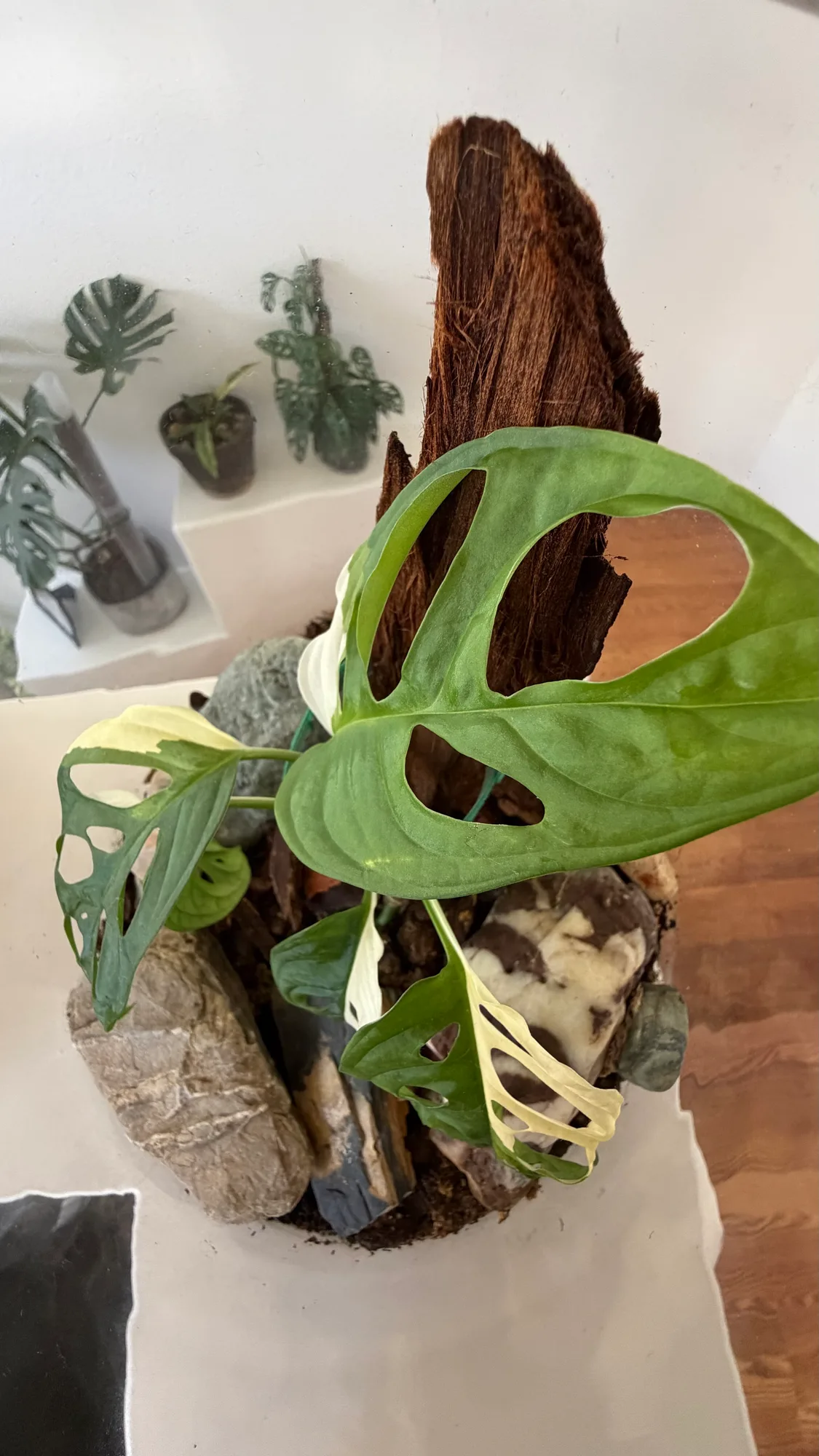
Save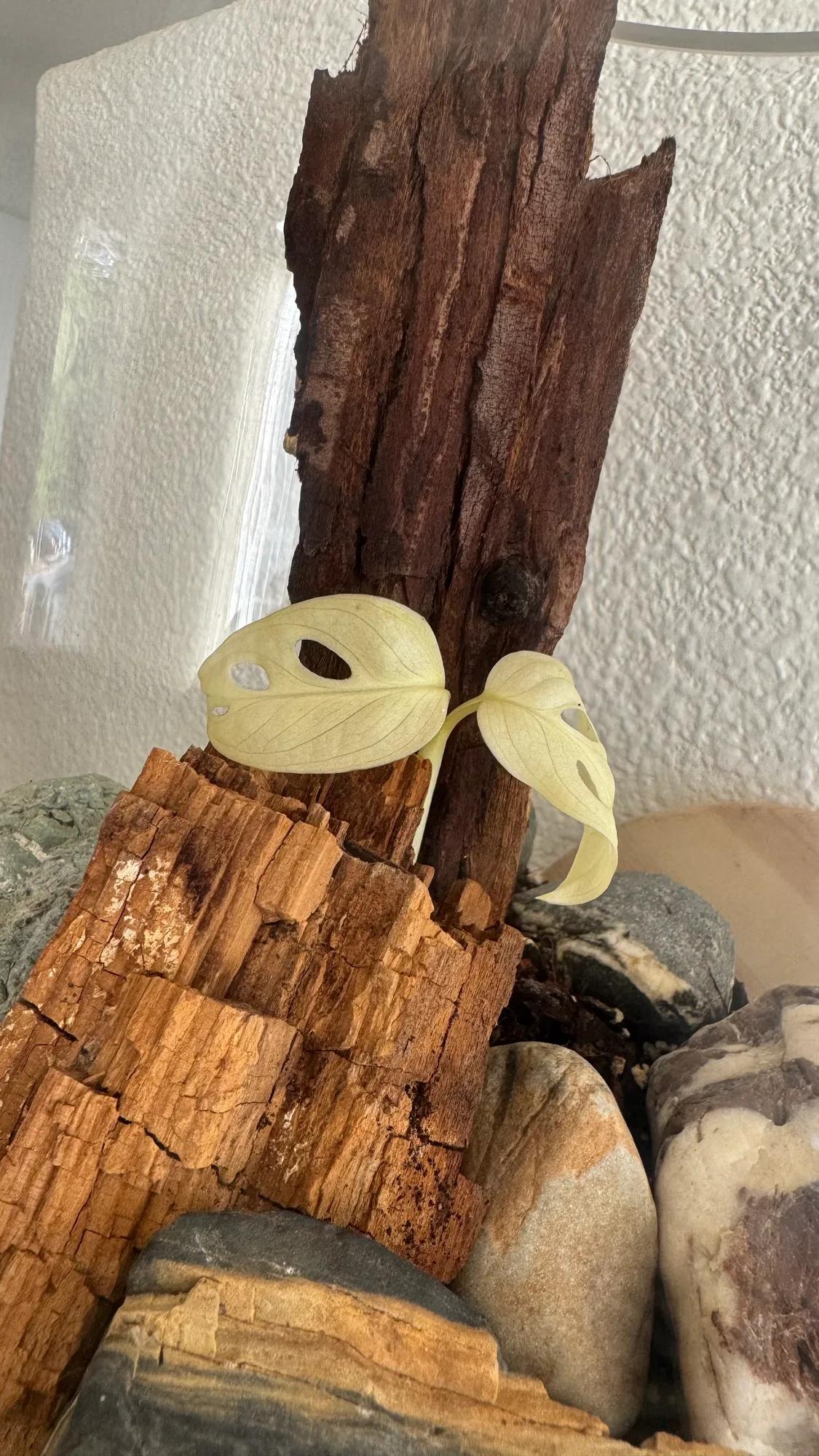 A young variegated Monstera adansonii climbing a piece of driftwood.
Why does the stem predict the leaves? University of Florida horticulturists describe unstable chimeras, plants whose growing points mix normal and unpigmented cells, where ordinary cell division drifts toward all white or all green shoots. Monstera itself has barely been studied. Treat stem color as a good predictor, not a promise.
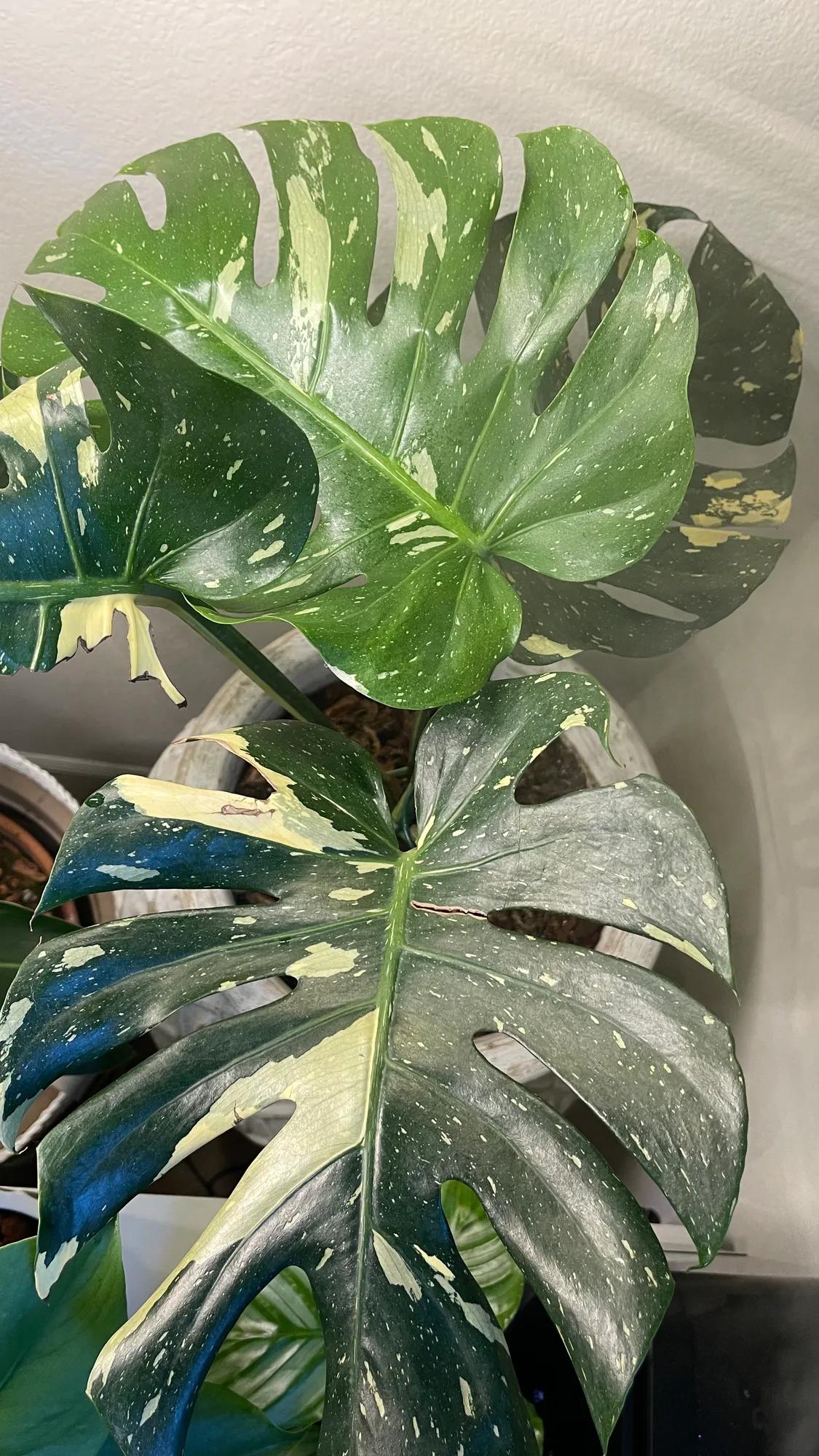
Thai Constellation is simpler. Its main grower, Costa Farms, describes the variegation as stable, so any healthy node should give speckled growth. That is a grower's statement, not a published genetic finding.
When Is the Best Time to Take a Cutting?#
The best time to take a variegated monstera cutting is late spring or summer, when the plant is growing fast and warmth speeds up rooting. The RHS recommends taking cuttings in summer with bottom heat. Wisconsin Horticulture Extension says monstera can be propagated any time of year, so a winter cutting still works. It will be slower, and it needs extra light and warmth.
For cuttings taken in late fall or early winter, University of Minnesota Extension suggests 2 to 3 hours of supplemental light in the early morning or late afternoon.
Which Rooting Method Works Best?#
For a variegated monstera, perlite is the safest default. University of Minnesota Extension calls it the most common rooting medium, and it keeps air around the stem, where rot starts. Water is the easiest to watch, but the same source says roots grown in water are weaker. LECA behaves like perlite and costs more. Sphagnum is popular with growers, though the extension sources do not cover it.
- Water in a clear propagation vessel lets you watch the roots and is the easiest to start. Change the water weekly, or whenever it turns cloudy.
- Sphagnum moss, kept damp and never soaked, grows roots that adapt well to soil. Use long fiber sphagnum.
- Perlite in a shallow reservoir of water gives the most air around the roots and the lowest risk of rot. Use coarse perlite.
- LECA, the clay pebbles, drains well and tolerates frequent watering, though it costs more.
Pick one method and leave the cutting in it. Every move disturbs the new roots.
Can You Air Layer a Variegated Monstera?#
Yes, you can air layer a variegated monstera, and for an expensive plant it is the low risk option. The section you want stays attached to the mother plant and keeps being fed while it roots, so nothing is lost if it takes longer than expected. Penn State Extension names air layering and stem cuttings as the two easiest ways to propagate monstera.
Iowa State Extension lists Monstera deliciosa among plants suited to air layering. Its method, applied to a node: place moist sphagnum around the stem, wrap it in clear plastic, secure it with twist ties above and below, and wait for roots, which usually appear within several weeks. Once the roots are several inches long, cut the stem just below the bottom tie and pot the new plant.
How Long Does a Monstera Cutting Take to Root?#
A monstera cutting usually shows its first roots in about 2 to 4 weeks, according to University of Minnesota Extension, and the same source notes that a rooted node can take 2 to 3 months to produce a new leaf. Variegated cuttings are often slower, because pale tissue makes less food. Costa Farms describes Thai Constellation as a slow grower for that reason.
When Is the Cutting Ready for Soil?#
A cutting is ready for soil when its roots are two to three inches long and have started to branch. Roots that have only just appeared are fragile and often die back when moved. Pot the cutting in a small container of chunky aroid mix, water it well once, then keep the mix slightly more moist than usual for the first two weeks while water roots adapt.
University of Minnesota Extension puts the signal as healthy roots plus active growth, and suggests a pot about 2 inches wider than the one the cutting is in.
What Care Does a New Cutting Need?#
A new variegated monstera cutting wants a warm, bright spot with no direct sun while it roots. University of Minnesota Extension recommends a bright, warm spot out of direct sunlight, with north or east windows working well, and misting every 2 to 3 days. Keep it away from cold windows and drafts. Penn State Extension notes that monstera prefers 60 to 85°F and humidity above 50 percent.
What Mistakes Cause Cuttings to Fail?#
Most failed cuttings rot before they root. The usual causes are a cutting with no node, a dirty blade, stagnant water, moss kept soaking wet or a cold windowsill. The second common failure is impatience: moving the cutting between methods, or potting it too early. Set it up once, keep conditions steady and wait. For the differences in care once the plant is established, see the comparison of Thai Constellation and Albo.
Growing adansonii? Its everyday care is in the variegated Monstera adansonii guide.
Is Propagating Monstera Safe Around Pets?#
Monstera is toxic to cats and dogs, and propagation often leaves loose cuttings and jars of water at pet height, so plan where they sit. The ASPCA lists Monstera deliciosa as toxic to dogs and cats because of insoluble calcium oxalates, with signs that include oral irritation, drooling, vomiting and difficulty swallowing. Its houseplant guide extends this to Monstera species generally.
Your hands need protecting as well. Penn State Extension recommends gloves when handling monstera because of possible contact dermatitis, and NC State Extension notes that the sap causes skin irritation. If a pet chews a cutting, call your veterinarian or the ASPCA Animal Poison Control Center at (888) 426-4435.

Save This Guide
Keep It for Your Next Plant Day
Pin it to find it again, or send it to someone growing the same plant. Every like tells us what to write next.
What You Need
- See Options
Pruning Snips
Clean, sharp cuts for cuttings and maintenance.
- See Options
Glass Propagation Station
Clear vessels so you can watch roots form.
- See Options
Sphagnum Moss
For rooting cuttings and topping substrate.
- See Options
Perlite
Rooting medium and soil amendment.
- See Options
LECA Clay Pebbles
Drainage layer that keeps roots out of standing water.
- See Options
Chunky Aroid Potting Mix
Bark, perlite and coir, drains fast and holds air.
Links in this list are affiliate links.
Common Questions
- Can you propagate a monstera from a leaf without a node?
- No. A leaf with only its stalk may grow roots in water, but it can never produce a new stem. The cutting must include a node with its bud, the thickened joint on the stem where new growth starts.
- How long does a monstera cutting take to root?
- University of Minnesota Extension gives about 2 to 4 weeks for roots on Monstera deliciosa, and up to 2 to 3 months before a new leaf appears. Variegated cuttings are often slower, because their pale tissue makes less food.
- Will my Albo cutting keep its variegation?
- It depends on the node. A stem section that shows both green and white near the node is the best predictor. An all green section tends to give green growth, and an all white one cannot sustain itself. Nothing guarantees the result, because Albo variegation is unstable.
- Is it safe to take monstera cuttings around pets?
- Handle cuttings with care. Monstera contains insoluble calcium oxalate crystals that are toxic to cats and dogs, and the sap can irritate skin. Wear gloves, keep jars of cuttings out of reach and call a veterinarian or the ASPCA Animal Poison Control Center at (888) 426-4435 if a pet chews one.
Written By
Gustavo Girard
Gustavo Girard is a product designer, and plants are the hobby. It runs in the family: both of Gustavo's parents are passionate about plants too. At home that means variegated monsteras, closed terrariums and bonsai, each one built with the same creativity that goes into designing a product. Every guide comes from that practice and is checked against university extension services, botanical gardens and the ASPCA plant list. Last reviewed on .