Foggy or Moldy Terrarium? Causes and Fixes
Why a closed terrarium fogs up or grows mold, how to tell normal condensation from too much water and the steps that bring the jar back into balance.
By Gustavo Girard. Updated . 7 min read.
This guide contains affiliate links. If you buy through one, GrowPlants may earn a commission at no extra cost to you. Read the Disclosure
A terrarium that fogs all day has too much water in it. A terrarium that grows mold usually has the same problem plus something dead for the mold to eat, often a dropped leaf or a fresh piece of wood. Both show up in the first weeks of a new jar, and neither means starting over. Take the lid off, pull out what is rotting and let the glass clear before you seal it again.
Why Does a Terrarium Fog Up?#
A terrarium fogs because warm, humid air inside meets cooler glass and the water condenses. Some fog is the sign of a working water cycle. The pattern tells you which case you have. Fog that comes and goes with the temperature of the day is healthy. Glass that drips all day, or water you can see sitting in the drainage layer, means there is more water in the jar than the plants can use.
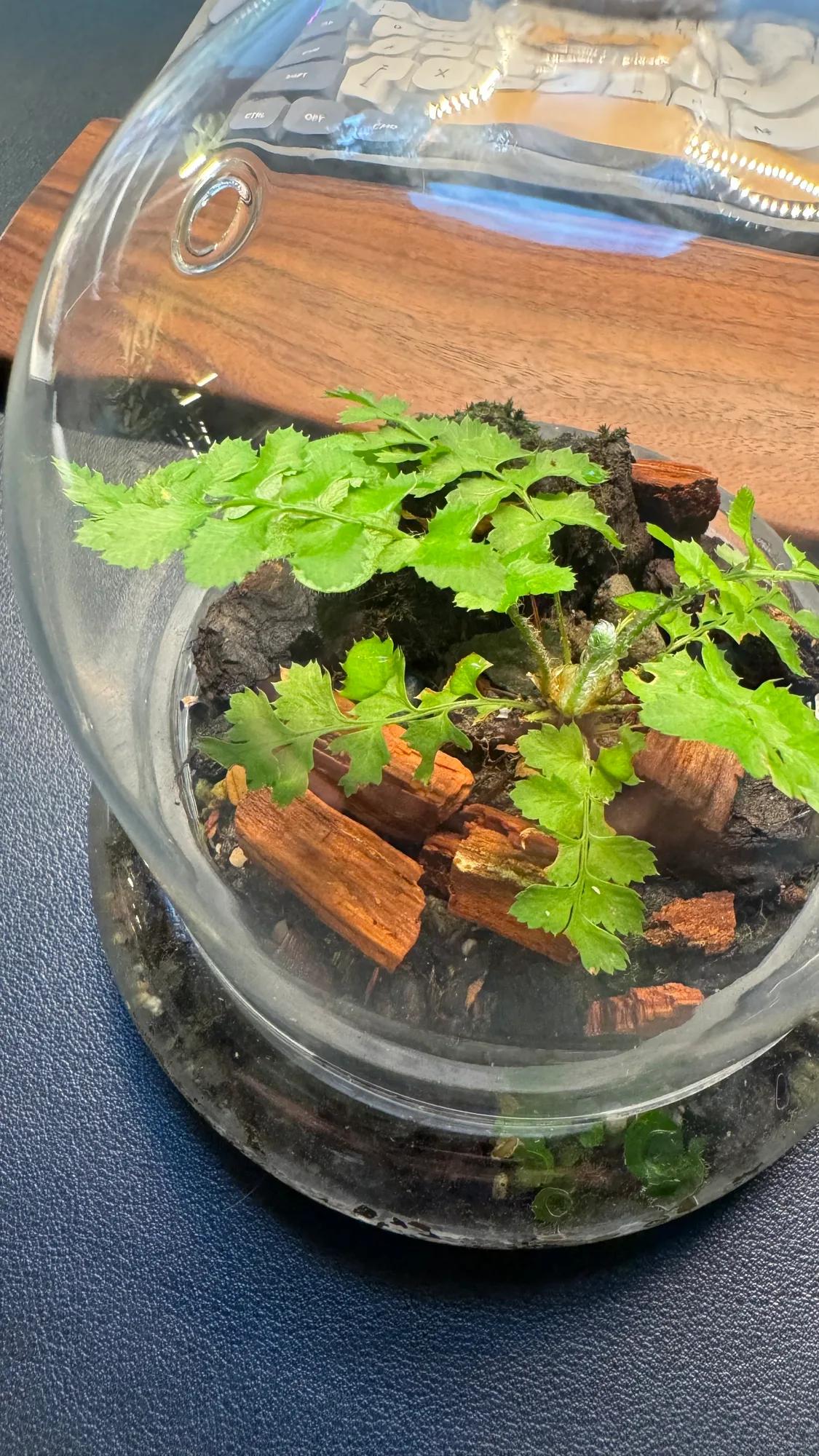
Save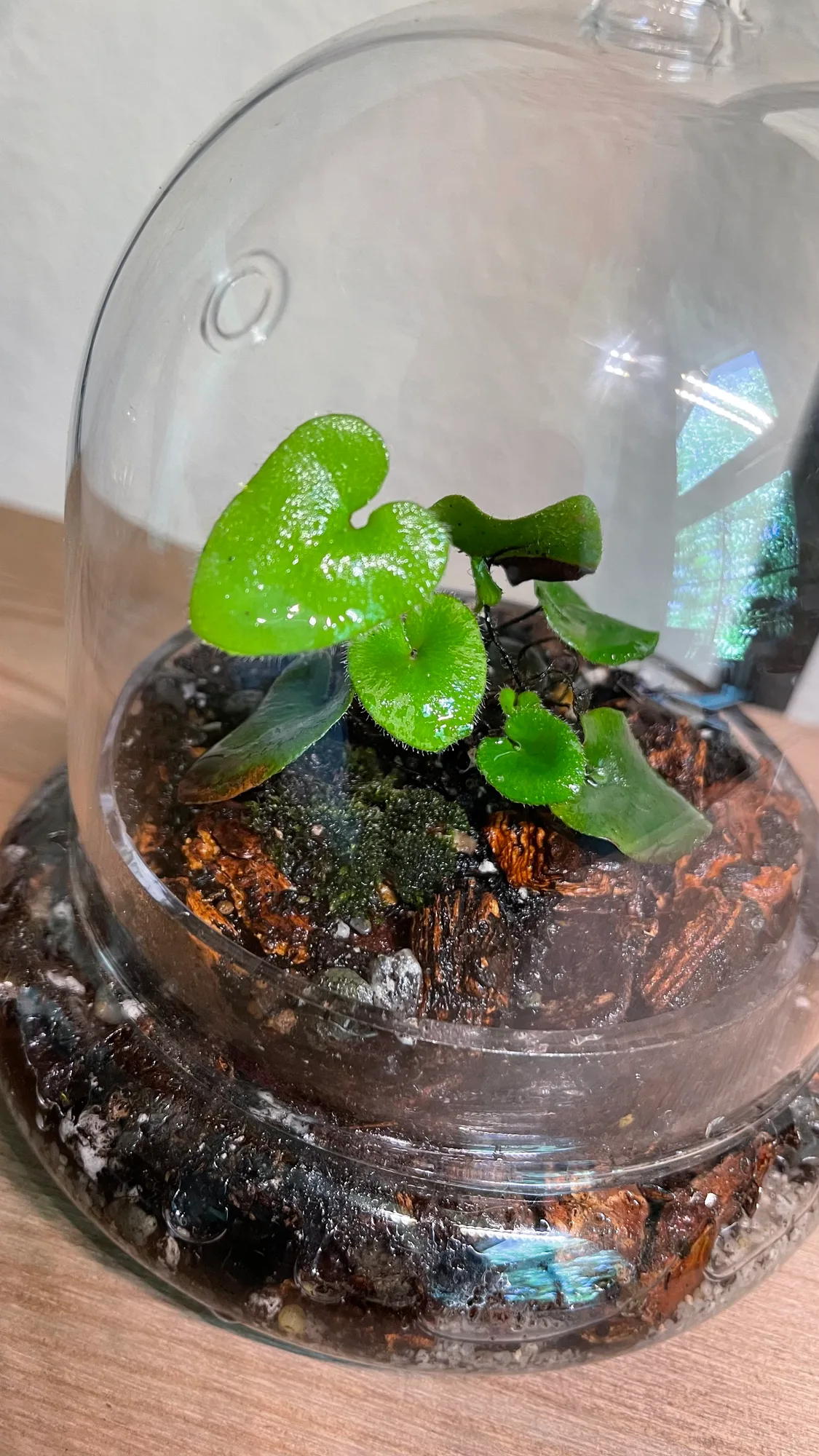 A closed glass cloche. With the lid on, the water stays inside and cycles between soil and glass.
The guides agree on what normal looks like. Penn State Extension describes healthy condensation as something that should resemble a light fog, rolling down the glass to water the soil. The RHS says light condensation shows there is just enough water, and warns that excessive condensation will cause plants to rot.
How Do You Fix Constant Condensation?#
Fix constant condensation by letting water leave the jar. Take the lid off for a few hours a day and wipe the inside of the glass with a clean cloth, which removes water physically. Repeat for several days until fog only appears part of the day. Also check the position: a jar in direct sun or next to a heater fogs heavily because the air inside overheats. Bright, indirect light keeps the cycle gentle.
Each guide frames the same fix slightly differently. The RHS says to remove excess condensation with a cloth or leave the lid open for a while. Mississippi State Extension suggests opening the lid for about an hour when droplets form, and Iowa State Extension suggests uncovering the jar, or cracking the lid, until some of it evaporates. Mississippi State also warns that sun through glass builds heat inside the container and can burn the plants, so move the jar before you blame the water.
What If the Glass Never Fogs?#
A terrarium that never fogs is usually too dry, although a lid that does not seal or a jar kept in a cold room can have the same effect. The RHS treats no condensation at all as a sign you may need to water. Check the substrate with a finger or a long tool before you add anything, because the surface can look dry while the lower layers stay damp.
Penn State gives three signals that it is time to water: condensation has stopped, plants start to droop or the soil feels dry. Add a few sprays with a fine mist bottle, seal the jar and look again the next morning. Small amounts are safer, since water cannot be drained back out.
Why Does Mold Appear?#
Mold appears in a terrarium when spores find moisture, still air and something dead to eat. New wood, a fallen leaf or a plant damaged during planting are the usual sources. A white, fuzzy patch on a piece of wood in the first month is so common among hobby builders that many treat it as part of settling in. It is a problem only when it spreads onto living plants or keeps coming back.
The timing is predictable. Penn State notes that diseases typically become established within the first few weeks, which is why a new jar needs the most attention. Iowa State warns that driftwood and similar wood can bring in unwanted insects and fungi, and the RHS advises removing any dying or dead plant material promptly to avoid rot and mold.
How Do You Remove Mold Without Starting Over?#
Remove mold from a terrarium by taking away its food first and its humidity second, without tearing the jar apart. Most outbreaks are local: one leaf, one piece of wood, one damaged plant. Working with tweezers and a cotton swab keeps the substrate and moss in place, and a day with the lid off dries the surface enough to stop the spread. For a single patch, this is the order.
- Pick out the moldy leaf or wipe the patch off with a cotton swab, using long tweezers to reach it.
- Leave the lid off for a day so the surface dries.
- Trim any leaves pressed against the glass, where water sits.
- Add a springtail culture, covered in the next section.
- Seal the jar again and water less from now on.
If a plant has turned soft and brown at the base, take it out. It is rotting, and it will feed mold for as long as it stays. Penn State mentions a diluted fungicide as an option for persistent disease, but removing the source is the first step.
Do Springtails Really Eat Mold?#
Springtails do eat mold, along with other fungi and decaying plant matter, which is why terrarium builders add them as a cleanup crew. University of Minnesota Extension says they feed on decaying roots and fungi and rarely damage plants. UC IPM lists decaying plant material, fungi, molds and algae as their food, and notes they soon die unless they find moisture.
That moisture need is why they suit a closed jar so well. Two cautions apply. UC IPM notes that some species can chew the roots and leaves of seedlings, although mature plants are generally not hurt. And springtails treat a symptom: if the jar holds too much water, they will not fix it, and University of Minnesota Extension notes they are often a sign of overwatered soil in ordinary houseplants.
Are Springtails and Terrarium Plants Safe for Pets?#
Springtails are safe around pets, and most terrarium plants are too, according to the sources we checked. University of Minnesota Extension says springtails do not bite or sting and are harmless to people and animals, and UC IPM says they will not bite or otherwise harm people or pets. The plants deserve a quick check, because one common terrarium plant, creeping fig, belongs to a genus the ASPCA lists as toxic.
The ASPCA lists nerve plant, Boston fern and the spikemoss Selaginella kraussiana as non-toxic to dogs and cats. True mosses such as cushion moss do not appear on the ASPCA list. The ASPCA has no separate creeping fig entry, but lists Ficus species as toxic, so treat it as toxic. The full plant table is in the guide to closed terrarium layers. For a suspected poisoning, call your veterinarian or the ASPCA line at (888) 426-4435.
How Do You Troubleshoot Other Terrarium Problems?#
Most other terrarium problems come down to water or light, and the symptom usually names the cause. Mushy stems point to water. Long, pale stems leaning toward the window point to light. Leaves going brown only where they press on the glass point to crowding. The table pairs each common symptom with its likely cause and the first thing to try, which is almost always smaller than rebuilding the jar.
| Symptom | Likely cause | First fix |
|---|---|---|
| Glass wet all day | Too much water or heat | Open the lid, wipe the glass, move out of sun |
| No fog at all | Too dry, or the lid leaks | Mist lightly, check the seal |
| White fuzz on wood | Fresh wood breaking down | Wipe it off, add springtails |
| Soft brown stem base | Rot from wet substrate | Remove the plant, dry the jar |
| Leaves rotting on the glass | Foliage touching wet glass | Trim the leaves |
| Long, pale stems | Too little light | Move closer to bright, indirect light |
| Tiny white jumping insects | Springtails | Nothing, they are a cleanup crew |
The pale stems entry follows University of Maine Extension, which describes long, weak stems with large gaps between leaves as a common sign of insufficient light, and the leaves on glass entry follows Mississippi State, which says foliage against the glass invites disease.
How Do You Prevent It From Coming Back?#
Preventing fog and mold in a terrarium comes down to adding less water than feels right. Use a mist bottle, never a pour. Pick off dead leaves the week they yellow instead of waiting for them to drop. Air the jar on a schedule, not only when the glass turns white. A jar built on a clean, light substrate with space between plants, as in the guide to closed terrarium layers, tolerates small slips.
For the schedule itself, Penn State mentions that some experts lift the lid for up to 15 minutes once a week. Mississippi State's advice to keep plants from touching each other matters more as the jar fills in over its first months. The RHS position rule never changes: bright, indirect light, away from direct sun and radiators.

Save This Guide
Keep It for Your Next Plant Day
Pin it to find it again, or send it to someone growing the same plant. Every like tells us what to write next.
What You Need
- See Options
Springtail Culture
Cleanup crew that eats mold in a closed jar.
- See Options
Long Terrarium Tool Kit
Tweezers, scissors and a small rake that reach the bottom.
- See Options
Fine Mist Spray Bottle
Adds water a few milliliters at a time.
Links in this list are affiliate links.
Common Questions
- Is condensation in a terrarium normal?
- Yes. The RHS says light condensation shows there is just enough water. Fog that comes and goes during the day is the water cycle working. Glass covered in droplets all day means the jar holds too much water.
- Will mold kill my terrarium plants?
- Not usually on its own. Mold in a terrarium mostly grows on dead leaves, fresh wood and damaged tissue. Remove what it grows on, let the jar dry slightly and watch for rot spreading to living stems.
- Are springtails necessary?
- No. University extension services describe springtails as scavengers that feed on fungi, molds and decaying plant material, so a colony is useful in a jar with mold on fresh wood. They will not fix a jar that holds too much water.
- Are springtails harmful to pets or people?
- No. University of Minnesota Extension says springtails do not bite or sting and are harmless to people and animals. UC IPM adds that some species can chew seedlings, though mature plants are rarely hurt.
- Why does my terrarium never fog?
- It may be too dry or too cool, or the lid may not seal. The RHS reads no condensation at all as a sign the jar may need water. Add a few sprays and check again the next morning.
Written By
Gustavo Girard
Gustavo Girard is a product designer, and plants are the hobby. It runs in the family: both of Gustavo's parents are passionate about plants too. At home that means variegated monsteras, closed terrariums and bonsai, each one built with the same creativity that goes into designing a product. Every guide comes from that practice and is checked against university extension services, botanical gardens and the ASPCA plant list. Last reviewed on .