Kusamono: What It Is and How to Start
What kusamono means, how it differs from bonsai, which plants and pots to use, how to water and overwinter it and which plants are safe for pets.
By Gustavo Girard. Updated . 7 min read.
This guide contains affiliate links. If you buy through one, GrowPlants may earn a commission at no extra cost to you. Read the Disclosure
Kusamono is the Japanese art of growing grasses, wildflowers and other small plants in a pot or on a moss mound, arranged to suggest a season or a place. The word combines kusa, grass, and mono, thing. Where bonsai shows a tree, kusamono shows the ground beneath it: a patch of meadow, a stream bank, a forest floor.
What Is Kusamono?#
Kusamono is a potted planting of herbaceous plants displayed as a finished composition. Longwood Gardens describes it as arrangements of wild grasses and flowers placed in pots or trays to suggest a season or place. It grew up alongside bonsai, where a small planting near the tree sets the season and the scene. That accent is called shitakusa. Shown alone as the main piece, it is kusamono.
How Is Kusamono Different From Bonsai?#
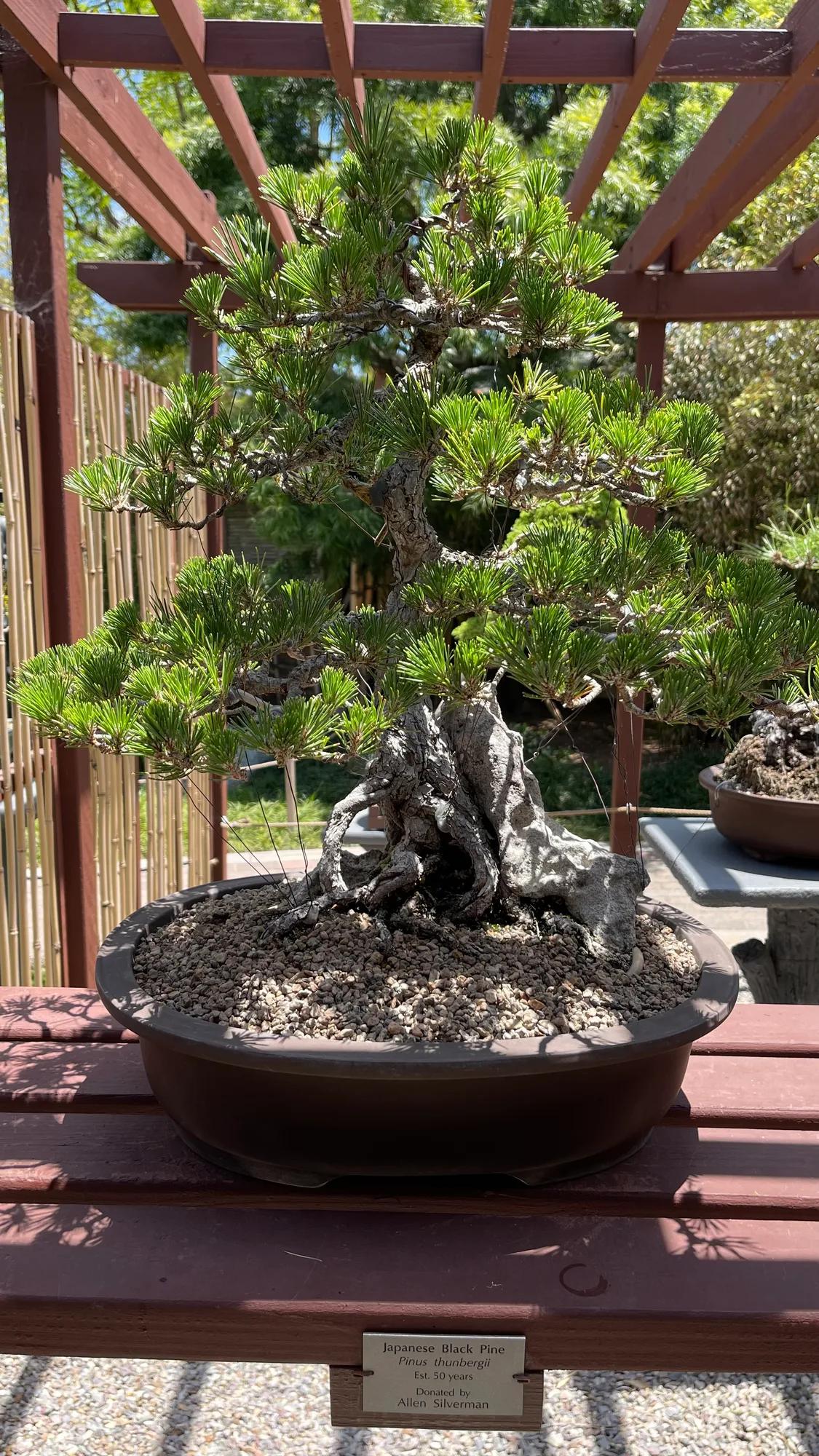
Kusamono differs from bonsai in the plants and in the pace. Bonsai trains a woody tree over years with wire and pruning. Kusamono uses soft plants that grow, flower, set seed and, in many cases, die back each winter, so the composition looks different every season. It asks for far less technique and looks good within months, which makes it a fine first project for anyone curious about bonsai.
It is not a short lived thing, though. Longwood Gardens notes that kusamono can live for more than ten years with proper care. The artist it profiles avoids repotting unless it is absolutely necessary.
Which Plants Work for Kusamono?#
Plants for kusamono are small and hardy where you live. Mix heights and textures in one pot: something upright, something that fills and something that trails. Plants that grow together in the wild tend to look right together in a pot too. The kusamono artist Longwood profiles builds pieces from plant communities, such as Pennsylvania sedge with wintergreen, and prefers small native plants over showy ones.
Save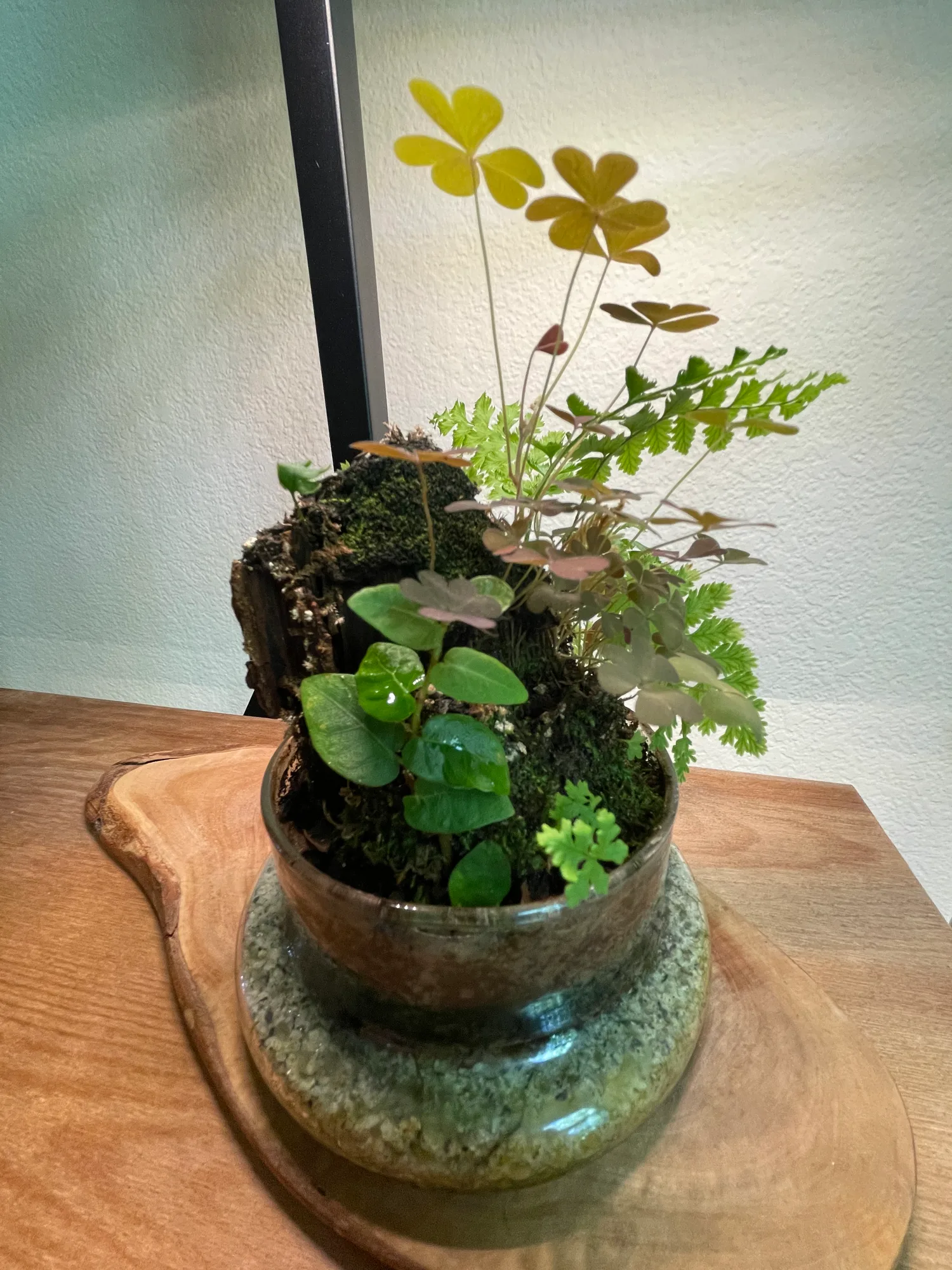 A fern, oxalis and a carpet of moss mixing heights in one small pot.
- Grasses and sedges: Pennsylvania sedge, dwarf mondo grass, small Carex
- Ferns: small hardy ferns
- Flowering perennials: violets, dwarf astilbe, small columbines
- Ground cover: moss, thyme, creeping sedum
Local wild plants and nursery leftovers both work. Kusamono rewards modest material.
One plant to skip: Japanese blood grass. Its red leaves are popular in accent plantings, but Clemson Extension says it reverts to cogongrass, a highly invasive green form, and that selling or planting it is illegal in South Carolina. NC State Extension notes cogongrass is on the USDA noxious weed list. A kusamono gets divided and moved around, which is exactly how a runner escapes into a garden.
What Soil Should You Use for Kusamono?#
Kusamono needs a mix that drains well yet holds enough moisture for small perennials living in a shallow pot. No horticultural institution publishes a kusamono recipe, so this guide follows common practice: start from a free draining bonsai soil mix and add a little organic matter for moisture loving plants. NC State Extension notes that shallow rooted plants such as spikemoss are suited to shallow pots, which is the whole idea of kusamono.
- Grasses and sedges: the bonsai mix on its own.
- Ferns and moss: the same mix with some chopped sphagnum moss worked in to hold water.
- Thyme and creeping sedum: the bonsai mix with extra grit, since both rot in wet soil.
Do not dig soil from the garden for it. Virginia Cooperative Extension warns that most native garden soils hold too much water for containers, and says every container needs at least one drainage hole unless you are making a bog.
How Do You Make a First Kusamono?#
Make a first kusamono in a shallow pot with drainage holes, using three to five small plants and a free draining mix. The aim is a loose, natural cluster rather than a neat arrangement, with the tallest plant slightly off center and the soil surface covered. Early spring is the easiest time, when the plants are about to grow and will root in quickly.
- Cover the holes of a shallow accent pot with mesh.
- Add a thin layer of free draining bonsai soil mix.
- Remove the plants from their nursery pots and reduce the root balls with small shears.
- Arrange them off center, tallest toward the back, and fill the gaps with mix.
- Mound the surface slightly and cover bare soil with moss or damp sphagnum.
- Water gently until it runs from the holes.
The planting will look loose at first. It knits together within a season.
How Do You Water Kusamono?#
Water kusamono whenever the surface begins to dry, and soak it until water runs from the holes. A small, shallow pot holds very little. Virginia Cooperative Extension says container soil holds a water supply of one to several days, and that unglazed terra cotta dries faster than glazed or plastic pots. In a hot week, a kusamono in an unglazed pot may need water every day.
Check with a finger, the method Virginia Tech suggests. On a mounded planting, feel near the base of the plants, not just the moss on top.
How Do You Keep Kusamono Through Winter?#
Keep kusamono outdoors through winter, but protect the roots. The perennials in a kusamono need a cold rest, and Illinois Extension explains the risk: roots are far less cold hardy than stems, and the small amount of soil in a pot gets much colder than garden soil. A plant that is hardy in your yard can still lose its roots in a shallow pot.
Illinois Extension suggests a few ways to handle that:
- Choose plants rated two zones colder than where you live.
- Sink the pot in the ground and mulch over it, so garden soil insulates the roots.
- Group pots in a sheltered spot, such as the north or east side of a building, and mulch heavily.
- Store them in an unheated garage or shed kept between 20 and 45°F.
Water well before winter and keep checking through it. A dormant kusamono uses little water, but a fully dry root mass does not recover.
Are Kusamono Plants Safe for Cats and Dogs?#
Some kusamono plants are safe for cats and dogs and some are not, so check each species before planting a pot a pet can reach. The ASPCA lists thyme, Boston fern and Krauss spikemoss as non toxic. It lists oxalis, which appears in the photo above, as toxic. Many popular kusamono plants, including sedges, mondo grass and sempervivum, have no ASPCA entry, which means unknown rather than safe.
| Plant | ASPCA listing |
|---|---|
| Thyme | Non toxic to dogs and cats |
| Boston fern | Non toxic to dogs and cats |
| Krauss spikemoss (Selaginella kraussiana) | Non toxic to dogs and cats |
| Oxalis | Toxic to dogs and cats, contains soluble calcium oxalates |
| Asparagus fern (not a true fern) | Toxic to dogs and cats |
| Sedges, mondo grass, astilbe, columbine, wild violets, sempervivum, moss | Not listed |
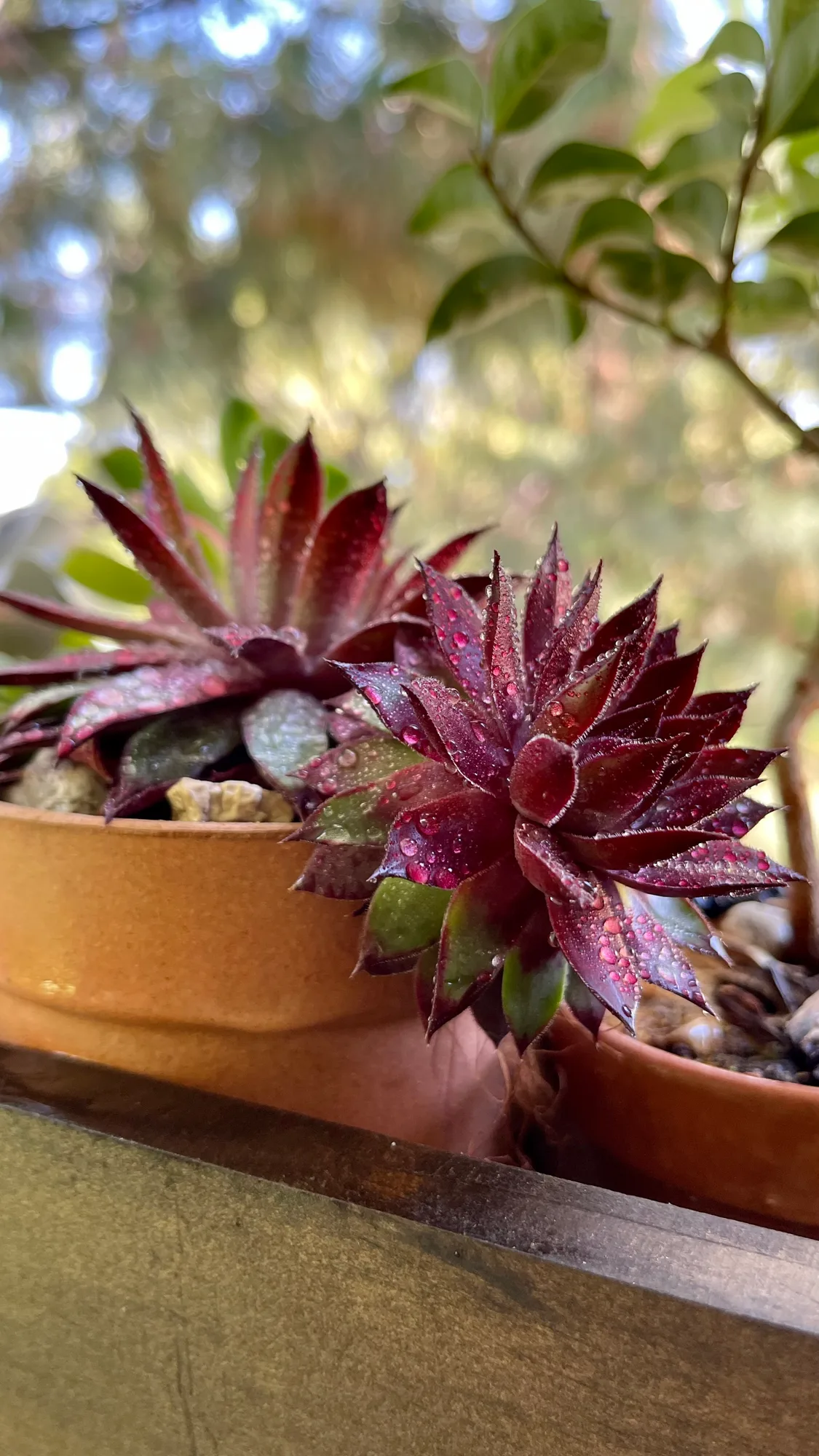
Two names cause confusion. The ASPCA entry called hens and chickens is Echeveria elegans, not the sempervivum on the cover. Its violets are African violets, a different plant from the wild violets used in kusamono. The ASPCA also notes that eating any plant can upset a pet's stomach. If one chews a planting, call your vet or ASPCA Poison Control at (888) 426-4435.
What Goes Wrong With Kusamono?#
Most kusamono problems come down to water or light. Crisp brown leaf edges usually mean the pot dried out. Yellowing and soft, collapsing centers usually mean it stayed wet. Scorched patches point to too much afternoon sun. Each of these shows within days, so the daily watering check doubles as the health check for a kusamono, and catches nearly everything early.
- Scorched leaves. Shade lovers burn in strong sun. NC State Extension says direct sunlight scorches spikemoss, and Clemson says Japanese sedge grows best in part shade or shade.
- Rot at the base. NC State warns that spikemoss left wet develops root rot. Thyme and sedum dislike wet roots too, so give them the grittiest corner.
- Spikemoss dies in winter. Krauss spikemoss is frost tender, rated only for USDA zones 11 and 12 by NC State. In colder places treat it as an indoor or summer plant.
How Do You Care for Kusamono Over the Year?#
Care for kusamono as you would any hardy plant in a very small pot. Keep it outdoors in morning sun and afternoon shade, water whenever the surface begins to dry and feed lightly during the growing season. Cut back dead growth in late winter, before new shoots appear. Divide or replant only when the pot is packed with roots, since a settled kusamono looks better each year it is left alone.
If trees are your next step, the guide to bonsai for beginners covers which species forgive a first year of mistakes.

Save This Guide
Keep It for Your Next Plant Day
Pin it to find it again, or send it to someone growing the same plant. Every like tells us what to write next.
What You Need
- See Options
Shallow Ceramic Accent Pot
Small handmade style pot for kusamono.
- See Options
Bonsai Soil Mix
Akadama, pumice and lava rock, free draining.
- See Options
Sphagnum Moss
For rooting cuttings and topping substrate.
- See Options
Beginner Bonsai Tool Kit
Shears, concave cutter and wire cutter.
Links in this list are affiliate links.
Common Questions
- What is the difference between kusamono and shitakusa?
- Both are small plantings of grasses and herbs. Shitakusa is an accent shown beside a bonsai to support it. Kusamono is displayed on its own as the main piece.
- Can kusamono be kept indoors?
- Most cannot for long. Kusamono are usually made from hardy outdoor grasses and perennials that need sun, fresh air and a winter rest. Bring one inside for a few days to display it, then return it outside.
- How often does kusamono need water?
- Often. Virginia Cooperative Extension notes that container soil holds only one to several days of water, and kusamono pots are smaller than most. In summer that can mean daily watering. Water when the surface starts to dry and never let the root mass dry out completely.
- How long does a kusamono last?
- Many years, if the plants suit your climate. Longwood Gardens notes that a well kept kusamono can live for more than ten years, cycling through dormancy each winter.
- Are kusamono plants safe for cats and dogs?
- It depends on the plants. The ASPCA lists thyme, Boston fern and Krauss spikemoss as non toxic, and oxalis as toxic. Most sedges, mondo grass and sempervivum have no ASPCA entry at all, so their safety is unknown.
Written By
Gustavo Girard
Gustavo Girard is a product designer, and plants are the hobby. It runs in the family: both of Gustavo's parents are passionate about plants too. At home that means variegated monsteras, closed terrariums and bonsai, each one built with the same creativity that goes into designing a product. Every guide comes from that practice and is checked against university extension services, botanical gardens and the ASPCA plant list. Last reviewed on .